

and a critical comment on the Mineralogical Magazine Peer Review
50th Lunar and Planetary Science Conference 2019 (LPI Contrib. No. 2132) 1520.pdf
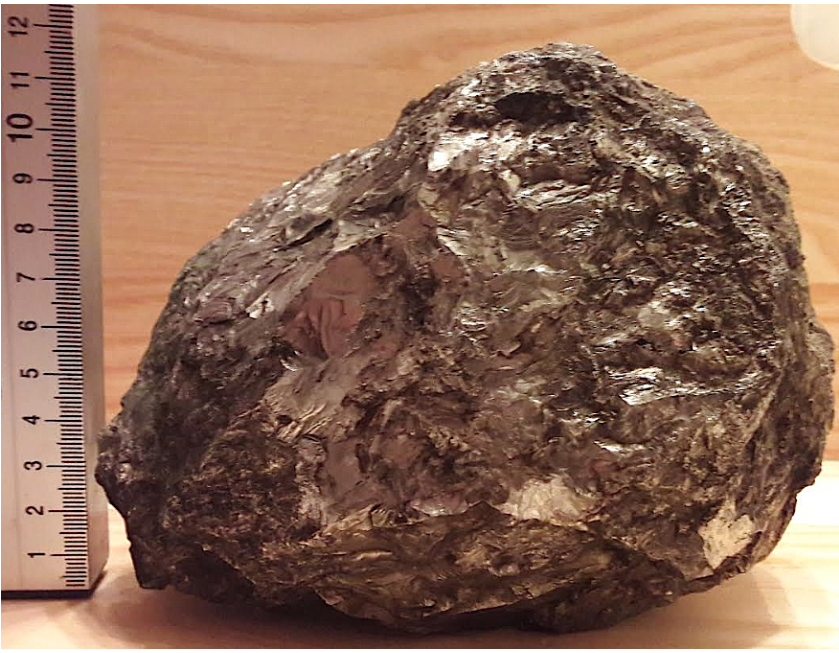
Trigonal and cubic Fe2Si polymorphs (hapkeite) in the eight kilograms find of natural iron silicide from Grabenstätt (Chiemgau, Southeast Germany) – authors
Frank Bauer1, Michael Hiltl, Michael A. Rappenglück, Kord Ernstson
We are referring here to the article recently published in the Mineralogical Magazine
by Luca Bindi et al. on the discovery of trigonal hapkeite:
Trigonal Fe2Si from the Blackville site, South Carolina, USA: occurrence, composition and determination of the crystal structure. – Mineralogical Magazine 90(1):1-20.
We point to our post above we published seven years ago at the LPSC 2019 on hapkeite, which occurs within the vast distribution area – spanning several tens of kilometers – of the entire iron silicide family in connection with the Holocene airburst impact event.
In addition, a very comprehensive paper on the impressive iron silicide deposit at the Chiemgau impact site was published in 2023, covering all previous findings and observations regarding the excavated metallic chunks and spherules (not in glass, as the article incorrectly claims), along with extensive SEM, TEM, and EBSD analyses:
A Prominent Iron Silicides Strewn Field and Its Relation to the Bronze Age/Iron Age Chiemgau Meteorite Impact Event (Germany) by Kord Ernstson, Frank Bauer, Michael Hiltl
All of this is omitted by Luca Bindi et al. and addressed only in passing in a single sentence with a citation. The Mineralogical Magazine and the responsible peer reviewers are accused of manipulating science. A quick web search using the term “trigonal hapkeite” would have listed our publications among the top results on Google.