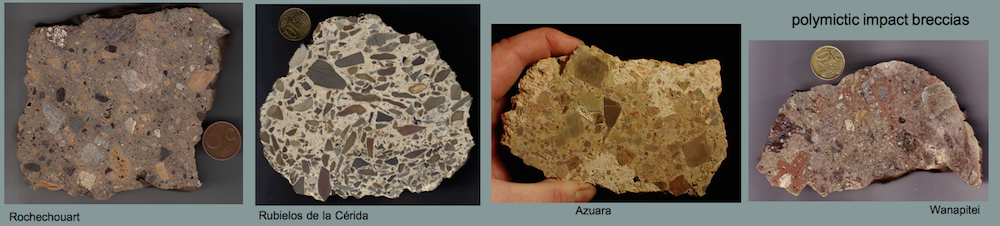
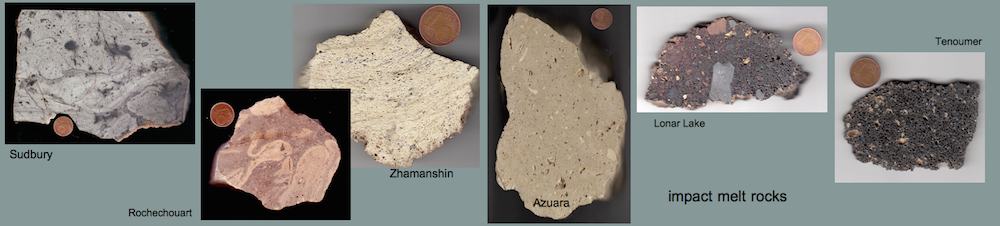
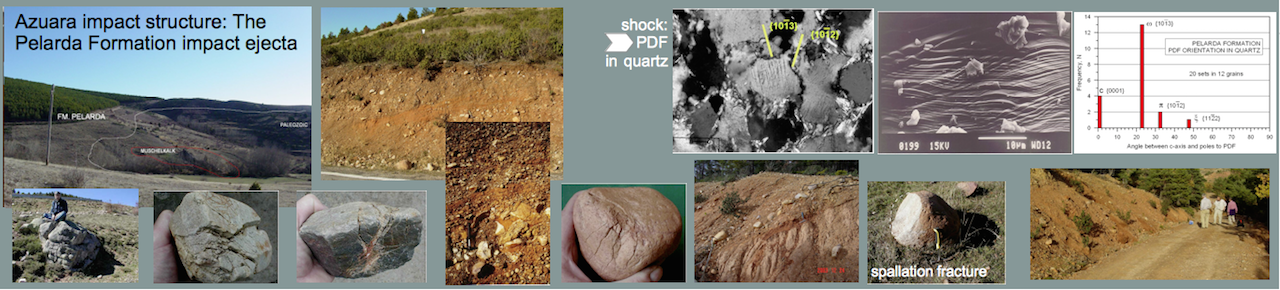
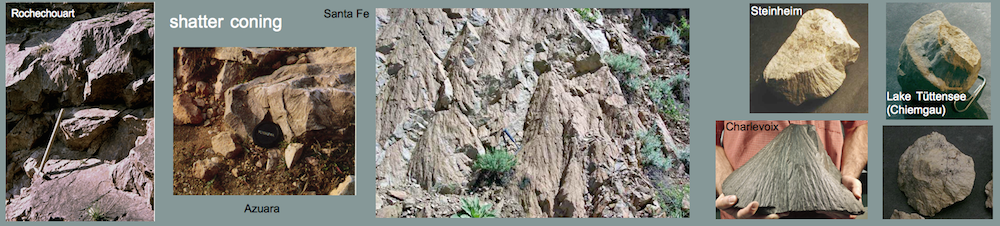
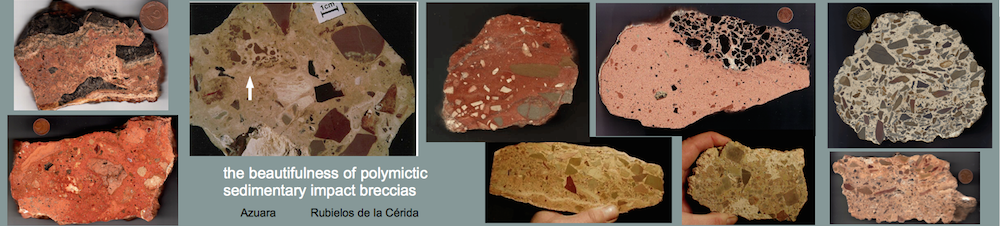
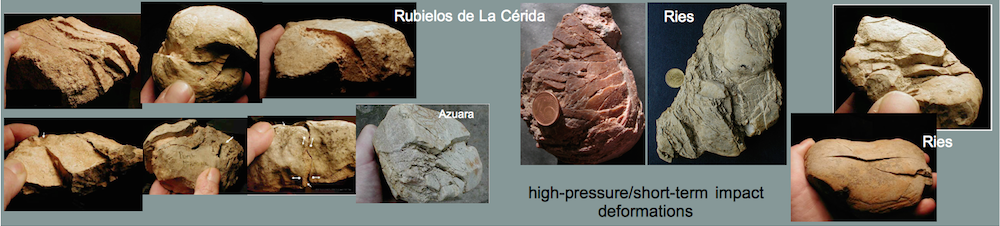
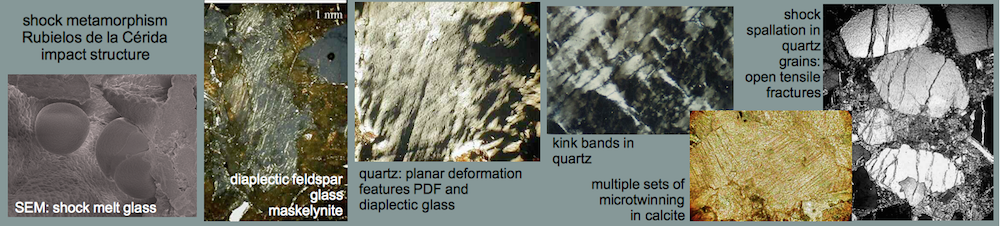
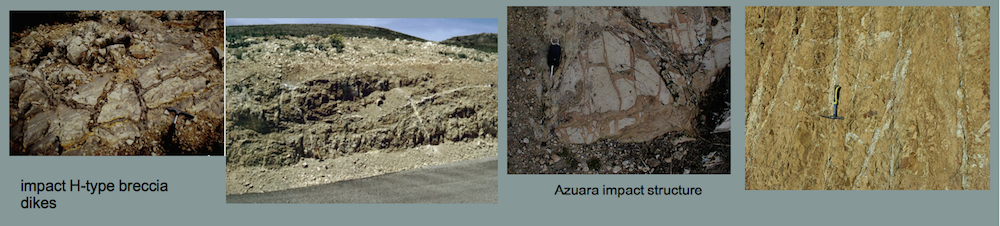
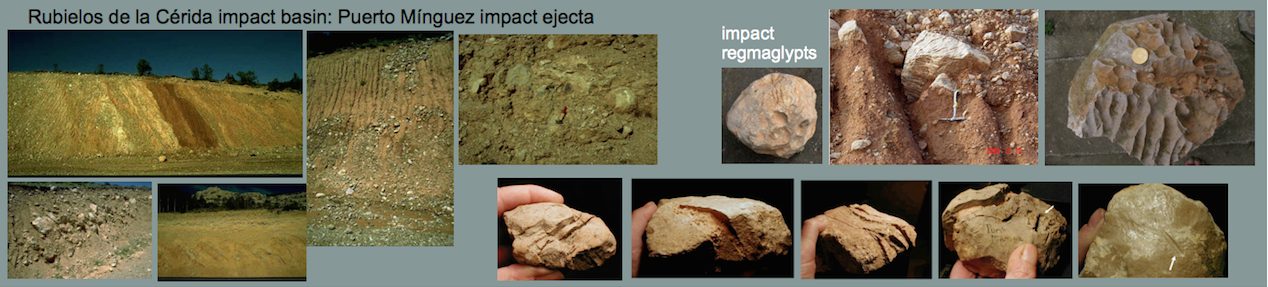
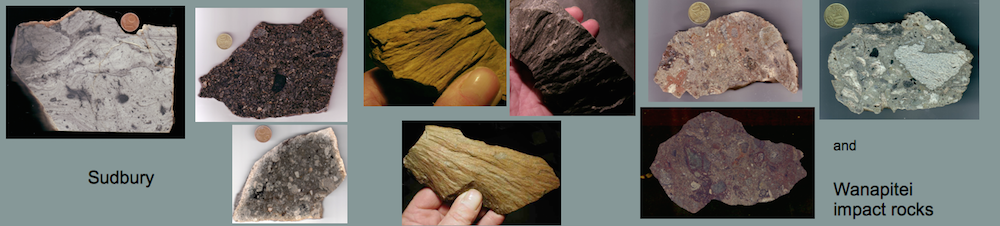
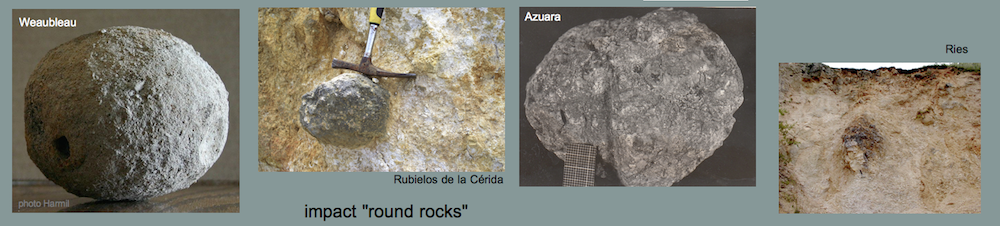
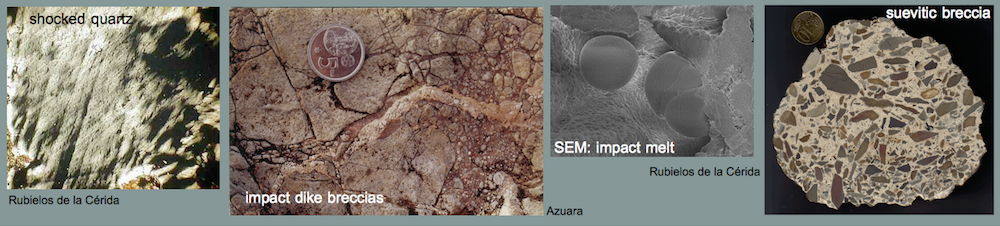
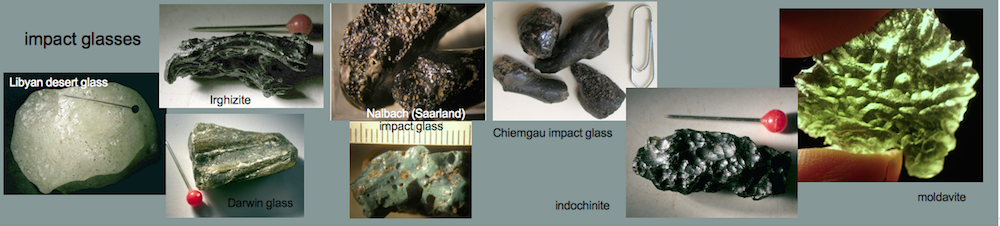
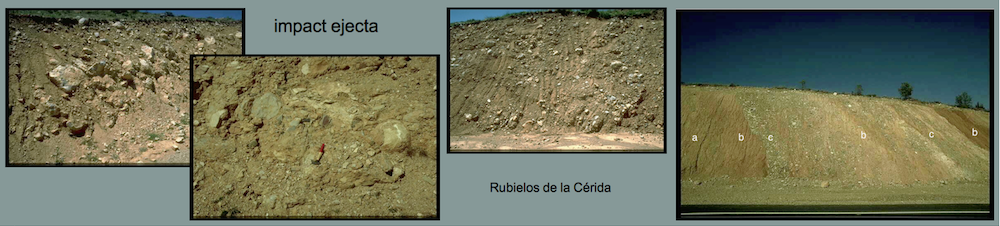
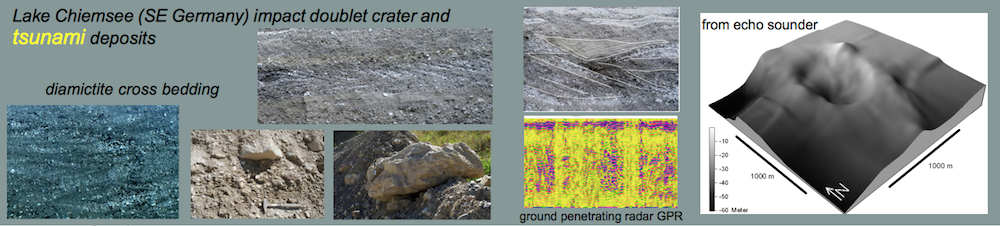
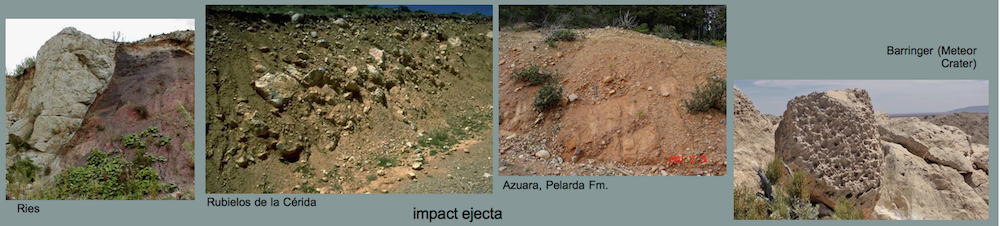
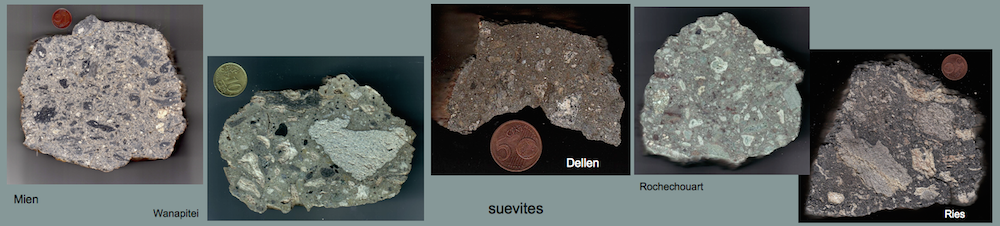
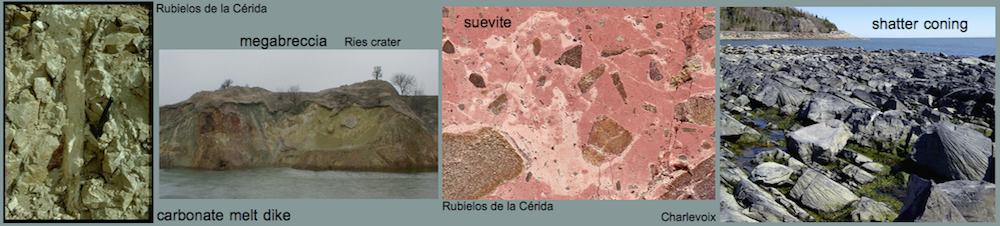
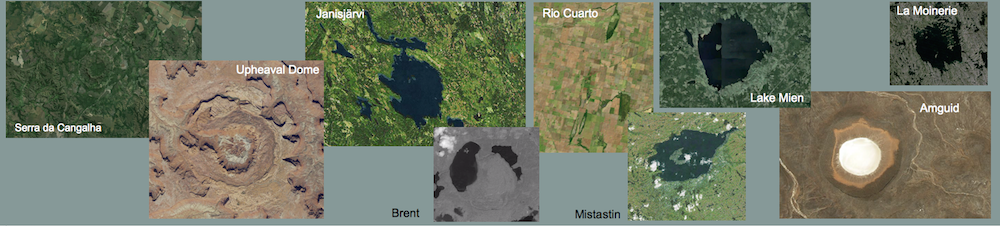
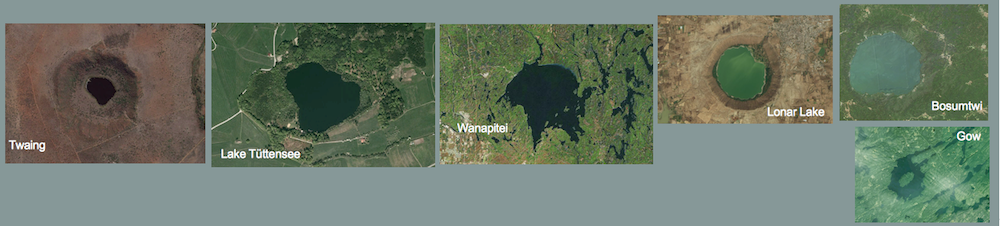

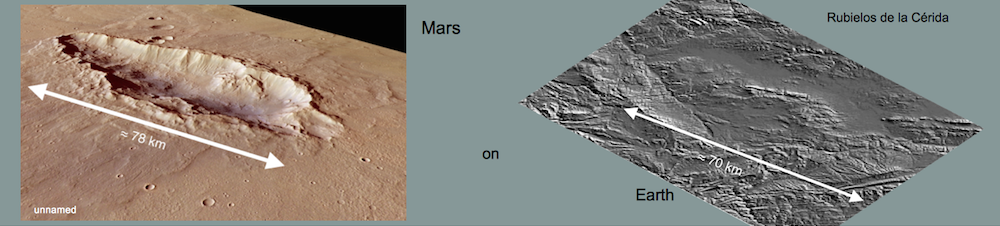
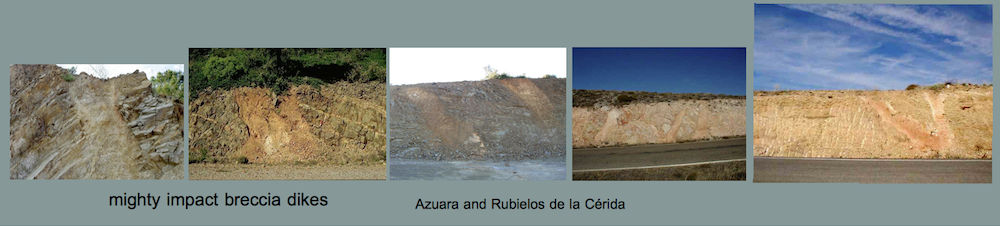
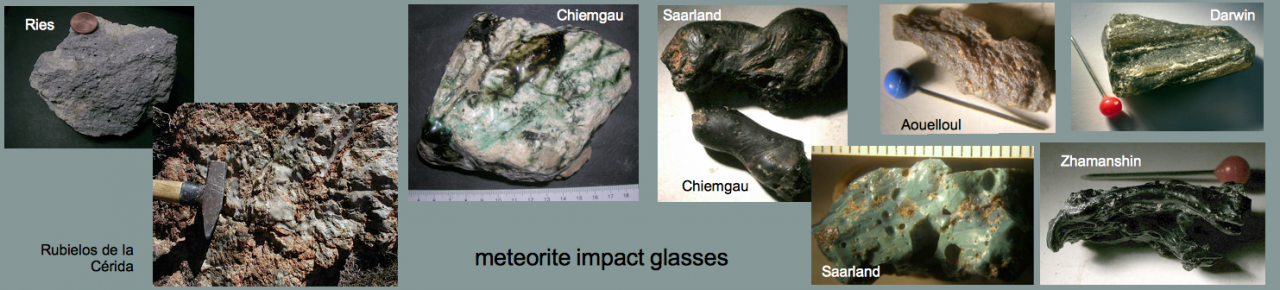
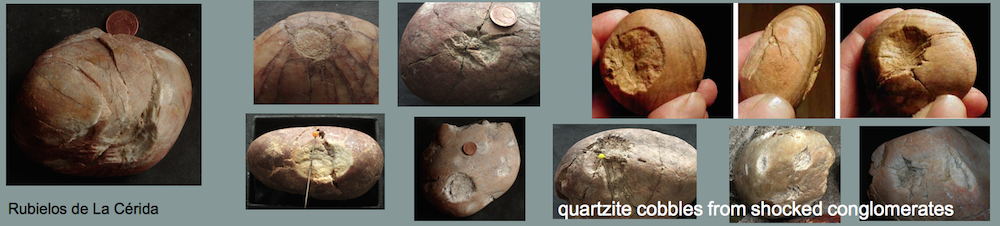

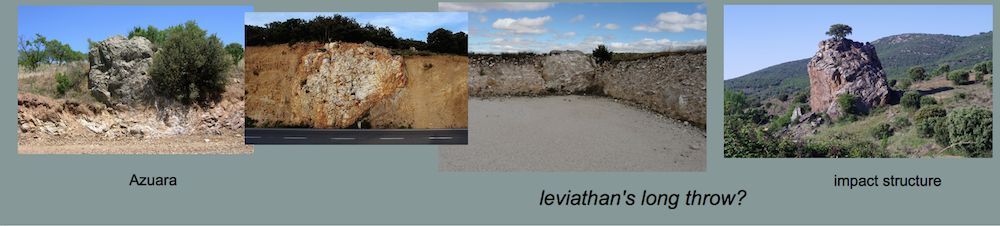
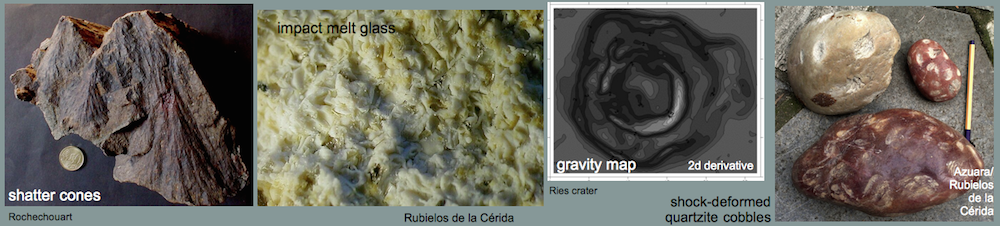
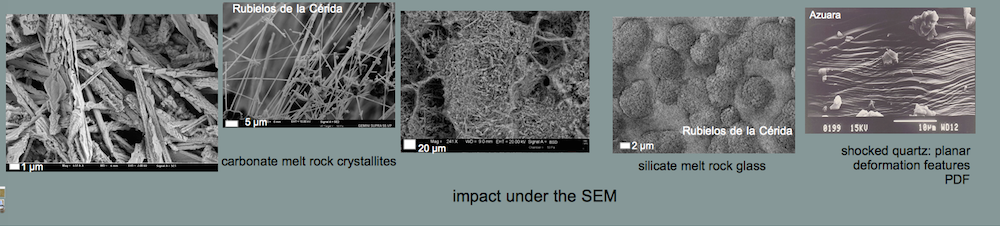
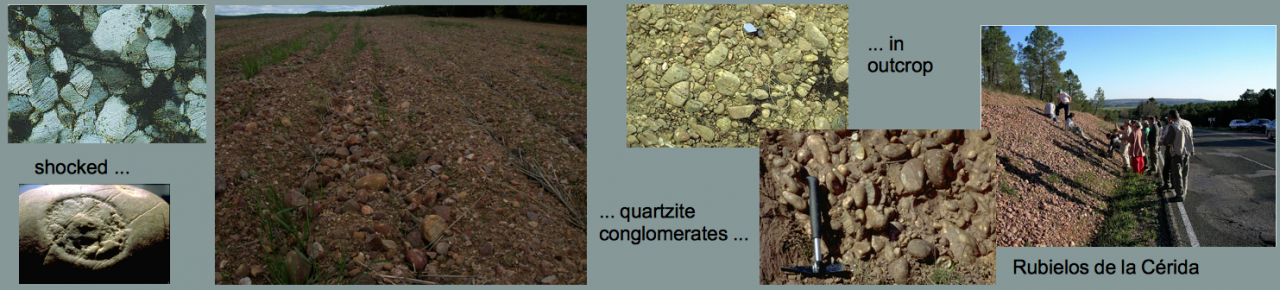
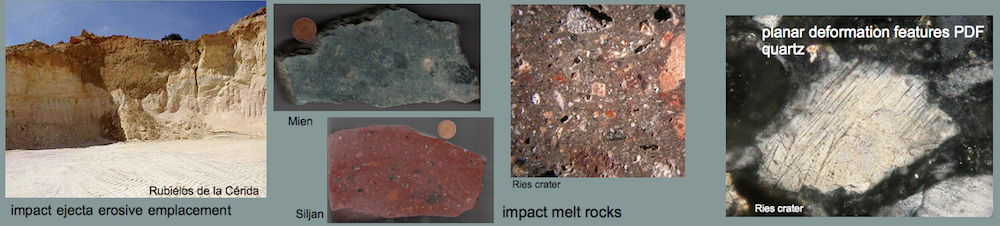
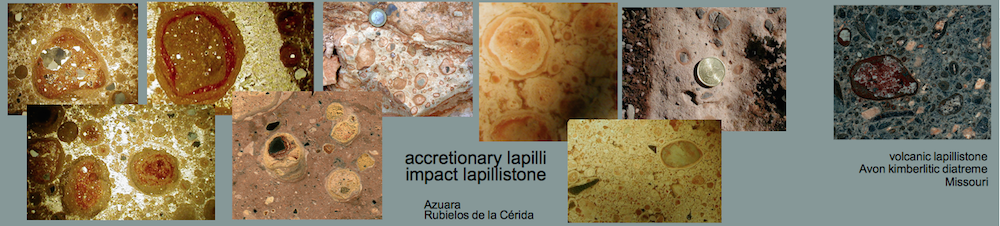
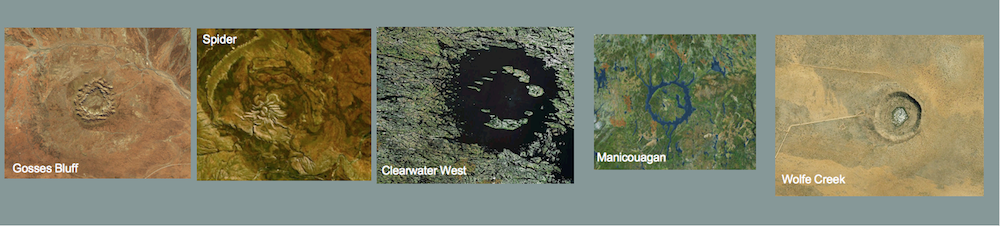
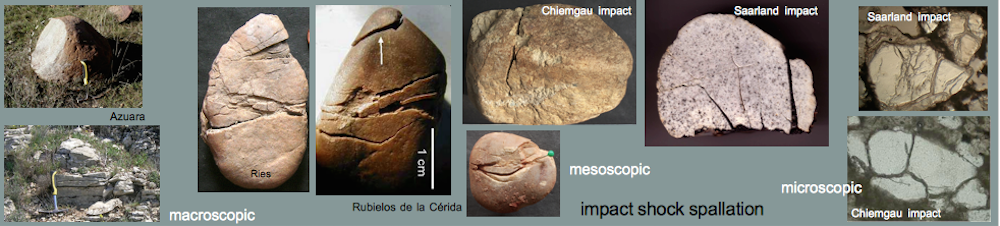
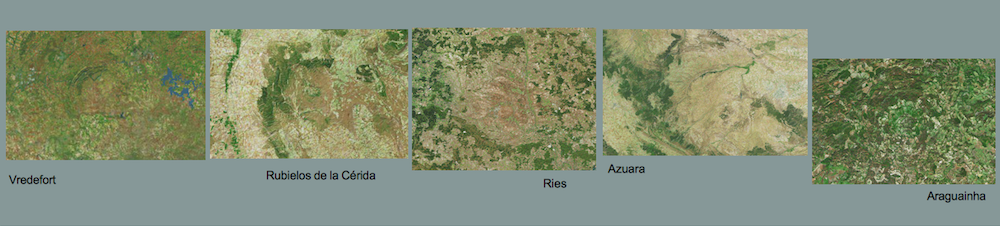
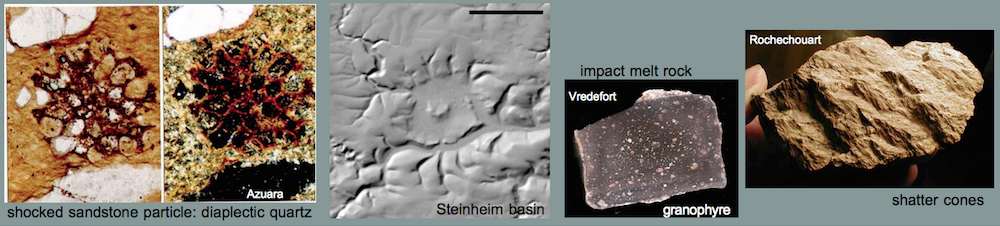
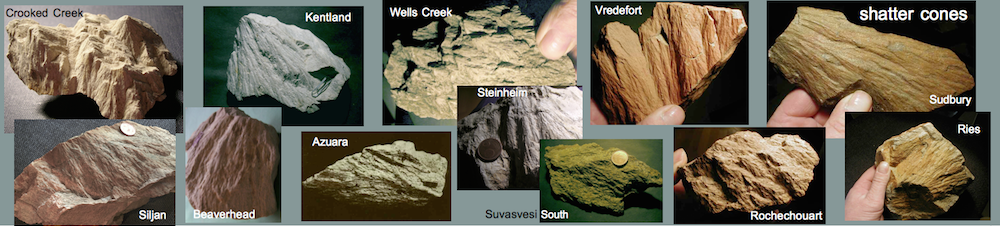
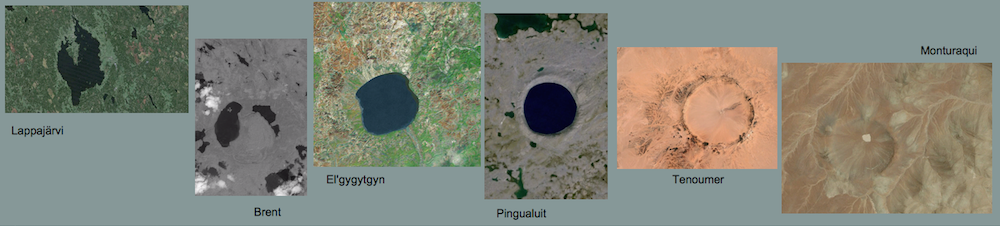
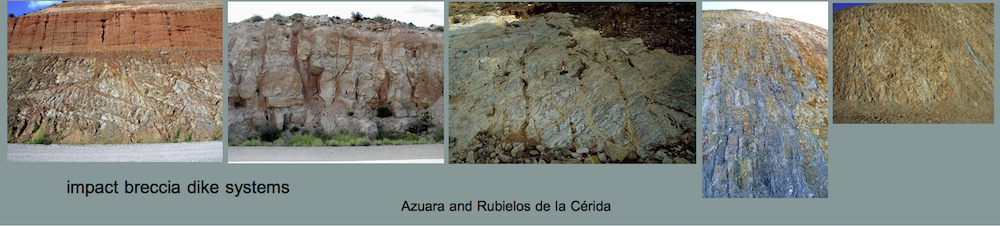
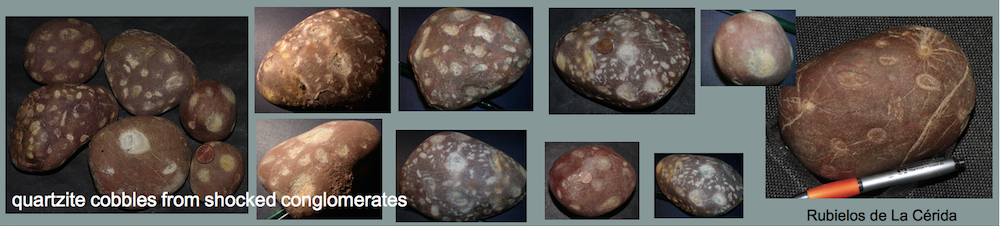
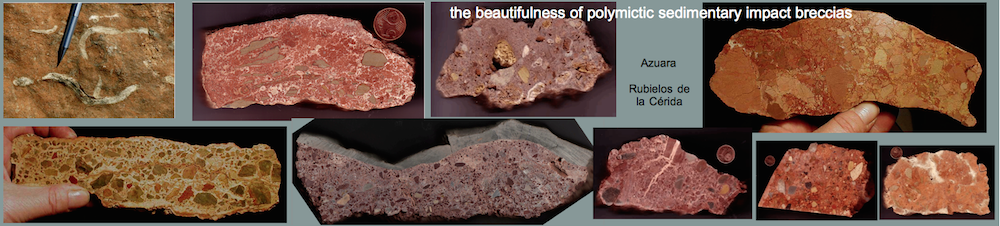
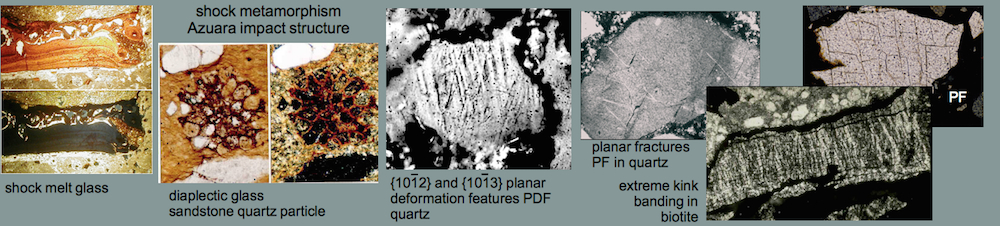
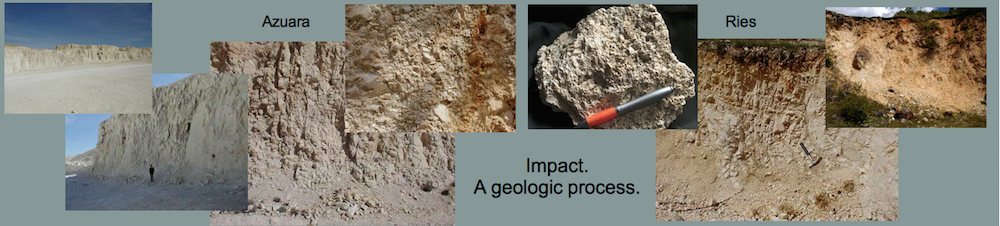
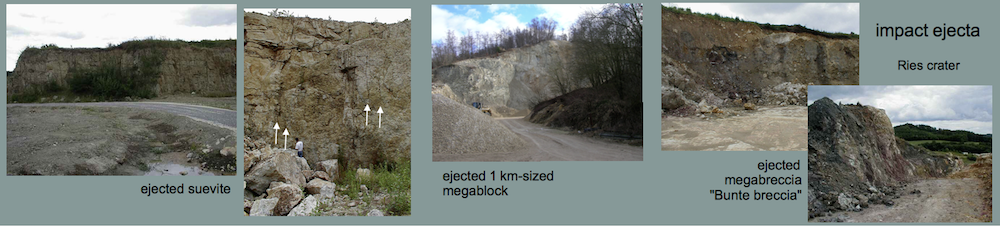
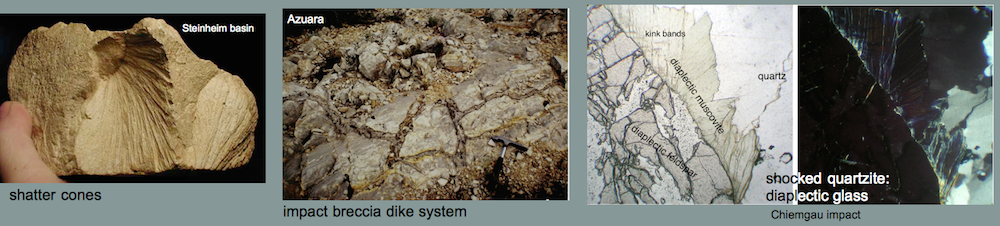
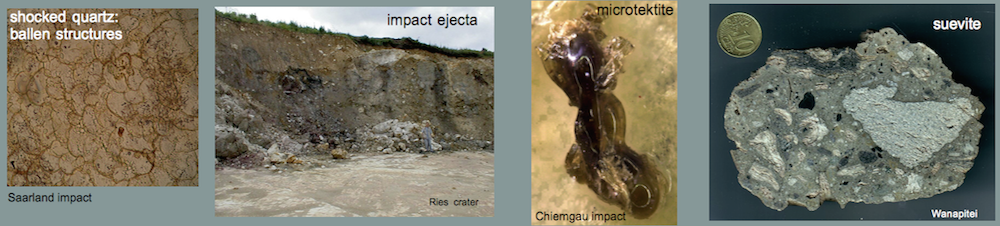
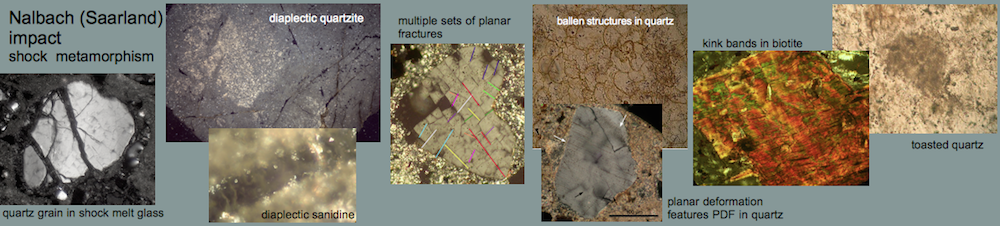
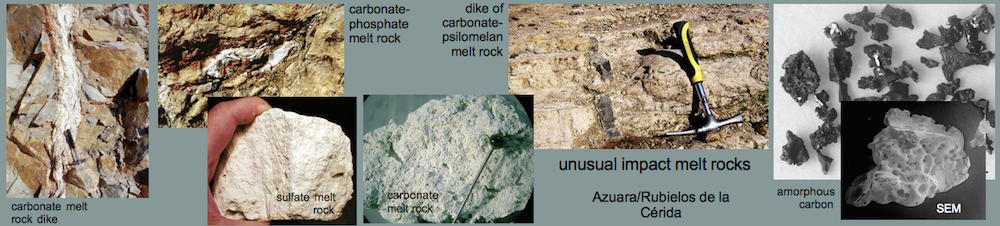
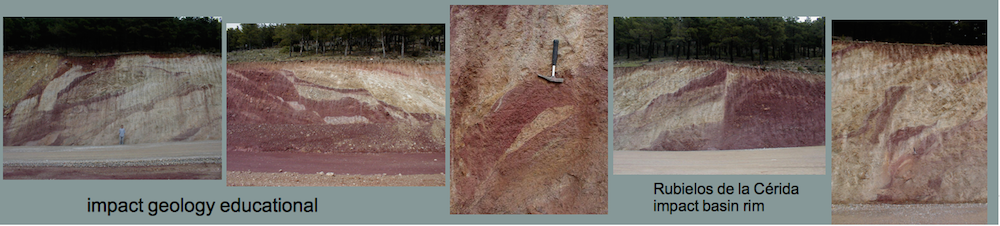
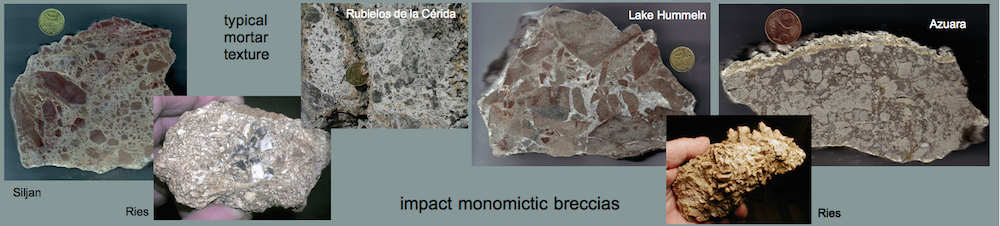
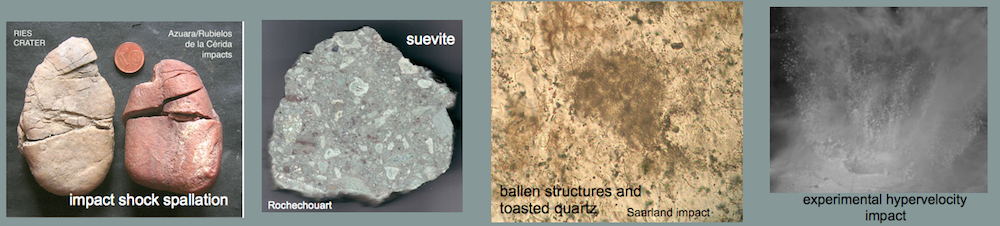
The investigation of the Azuara and Rubielos large impact structures now lasts about 30 years. Since the early eighties of the last century we have produced abundant and very exciting evidence for this unique geological scenario on the Iberian peninsula – despite much bitter opposition from various sides, persons and for various motives, which can be looked up elsewhere on this website. Much of our geological and petrographical material is being presented here in the web, but it is only part of an accumulation many times greater. Therefore we have decided to add little by little to the complex of the Azuara and Rubielos de la Cérida impact geology, and we don’t give up hope that a few more geologists become motivated to visit this extraordinary meteorite impact ensemble of some 120 km length.
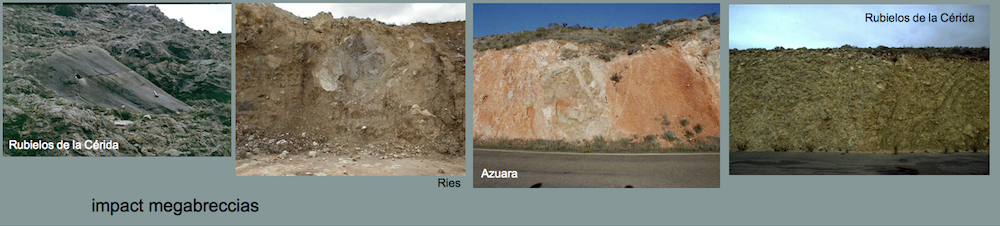
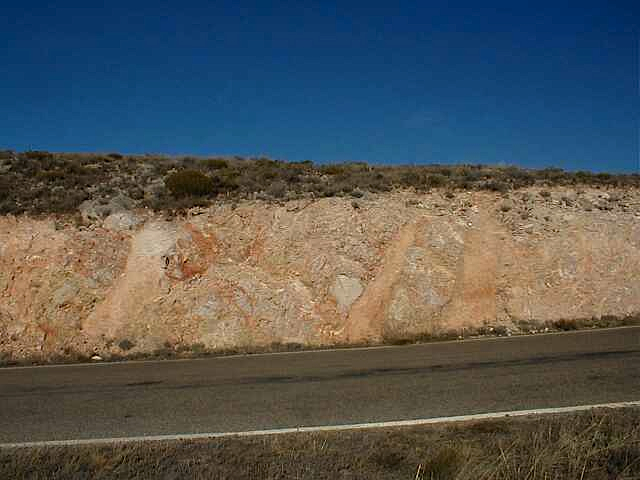
We begin with an outcrop scenario easily accessible roadside at the village of Moyuela in the middle of the Azuara structure (Fig. 1) typically showing the enormous destruction the impact exerted on the well-bedded Jurassic limestones, which is inexplicable by normal Alpidic tectonics.
Continue reading “New images – Azuara impact structure: peculiar megabrecciation near Moyuela”