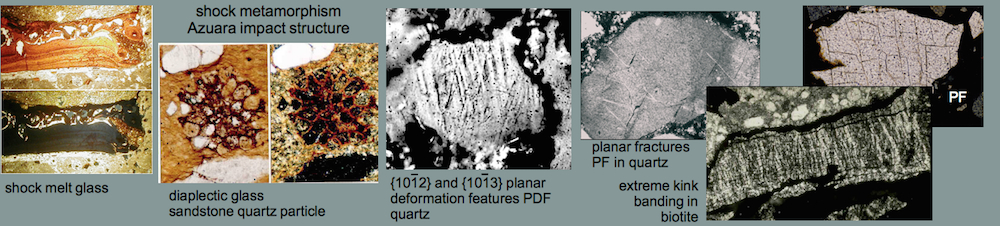
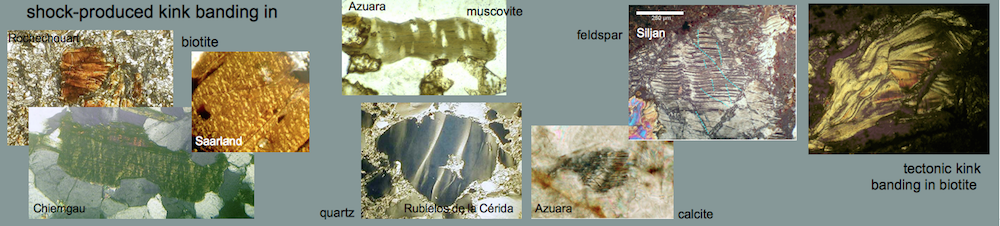
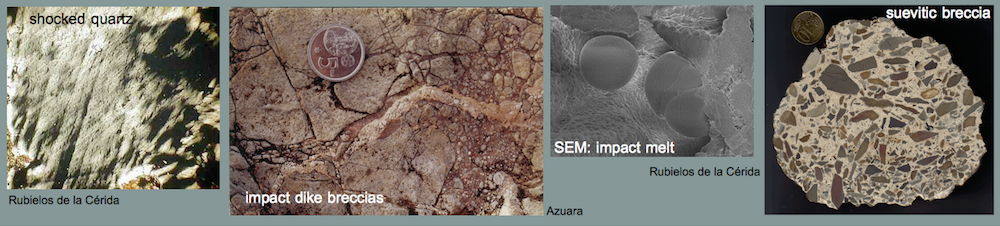
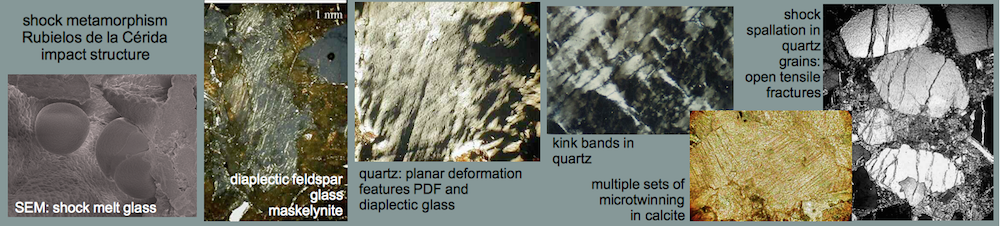
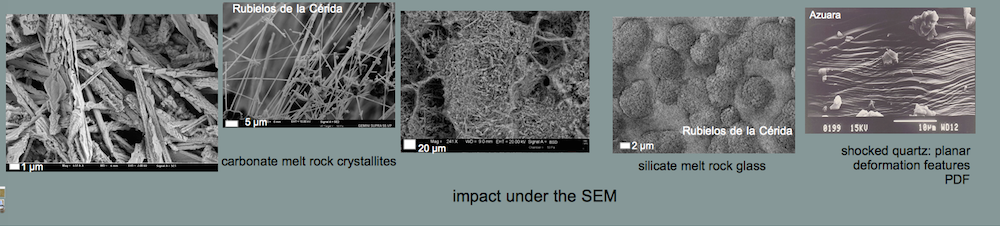
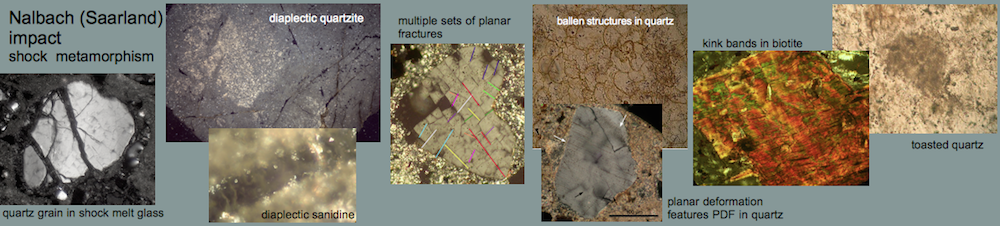
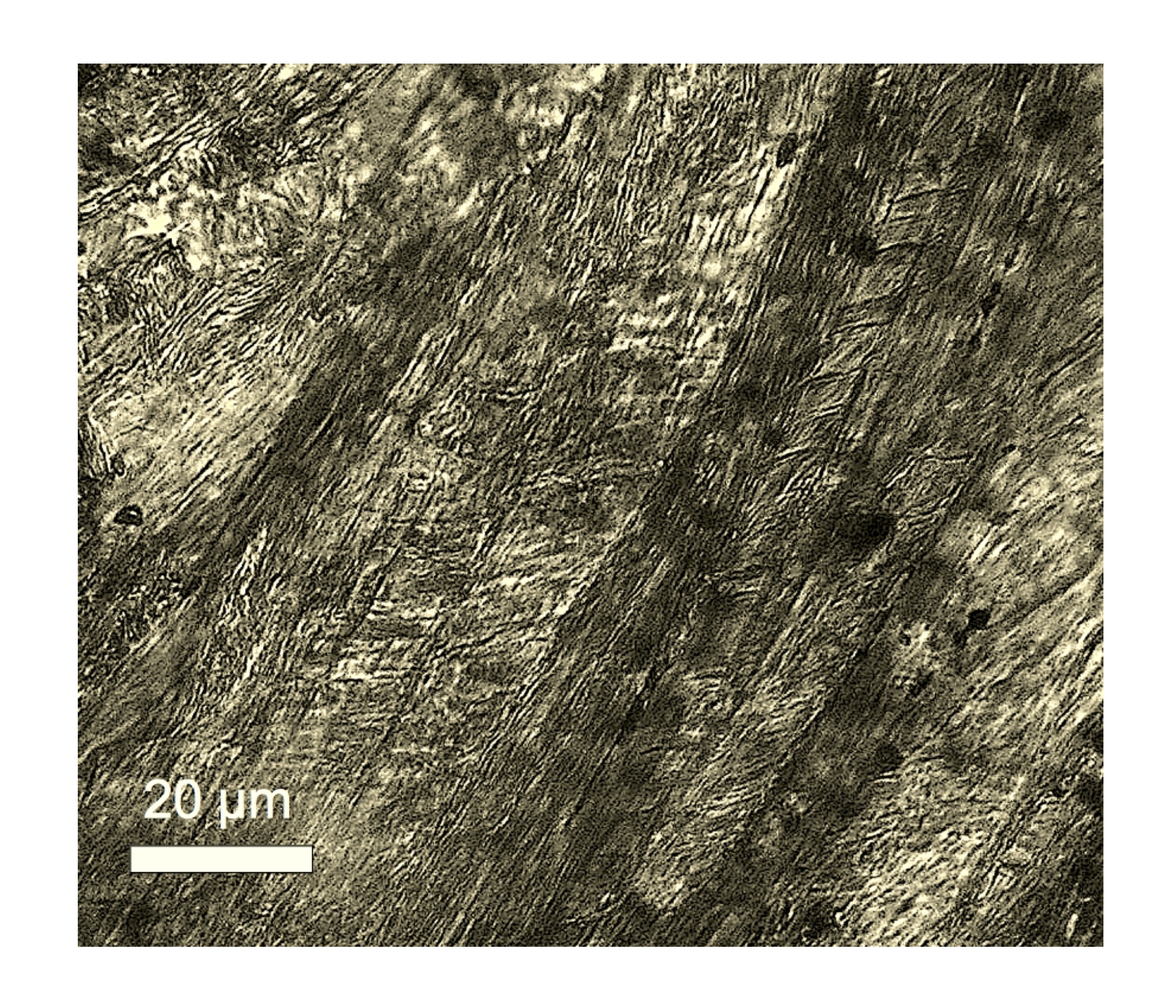
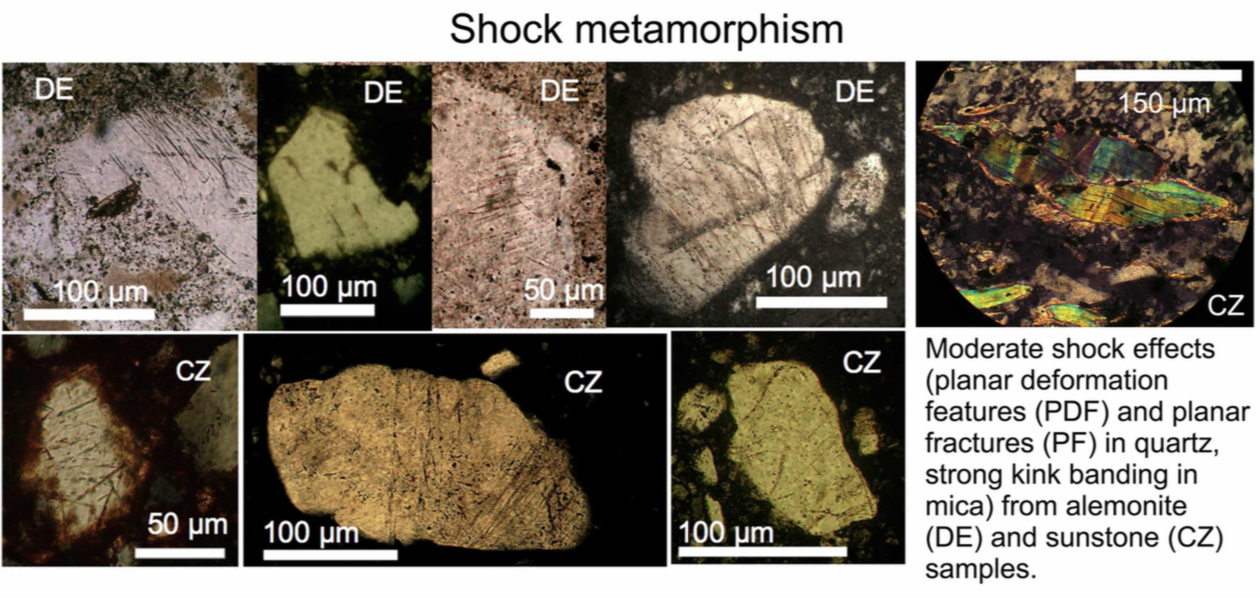
Shock effect in calcite. Multiple sets of closely spaced planar features (micro twins). The width of the twins is of the order of only one micrometer. Thin section micrograph, crossed polarizers. From a polymictic breccia, rim region of the Rubielos de la Cérida impact basin crater chain.
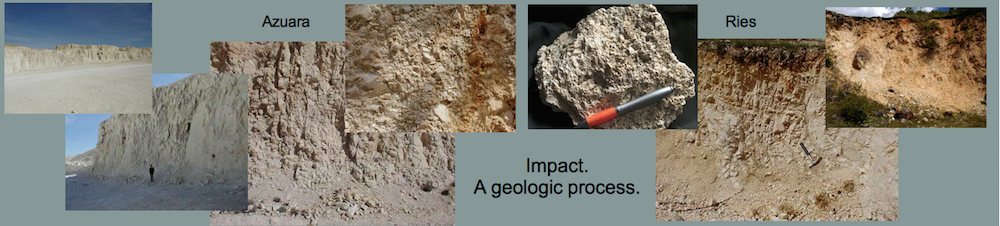
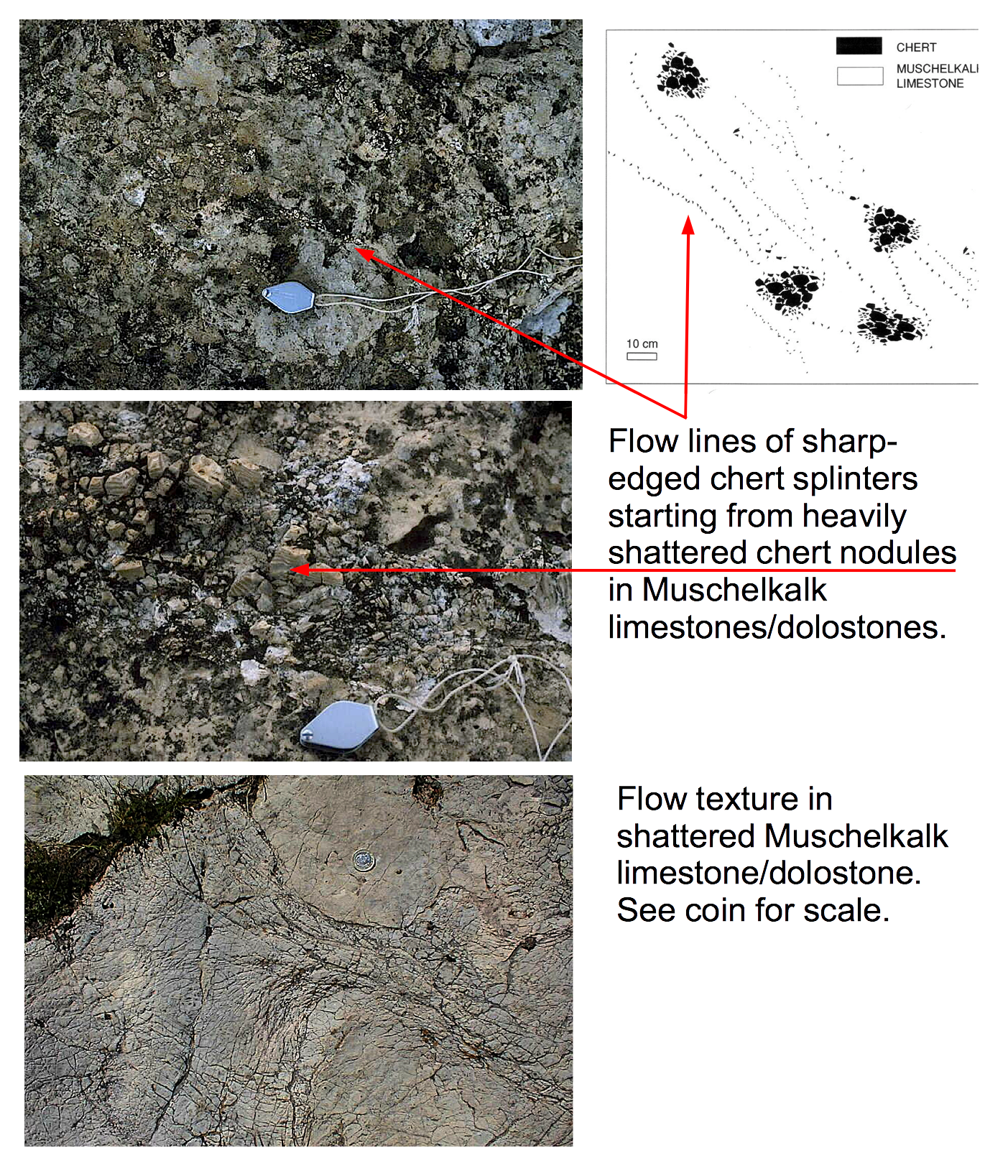
Rock fluidization, Azuara Impact Structure (Spain)
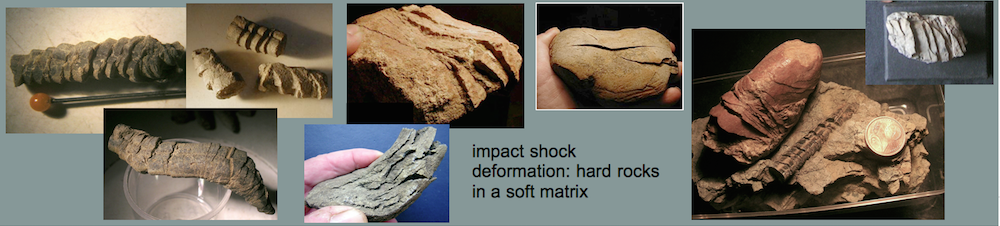
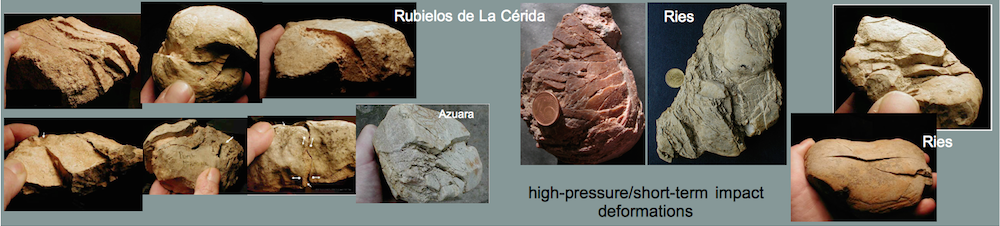
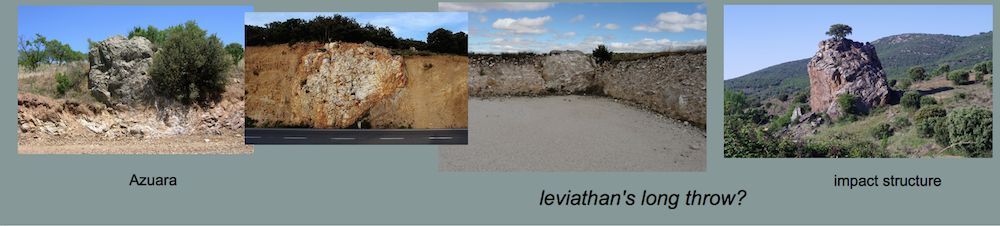
impact rock fluidization in competent limestone Azuara impact Spain
Rock fluidization in strongly competent limestones/dolostones (Muschelkalk Fm.); Monforte de Moyuela, Azuara impact structure, Spain. See article Rock fluidization during peak-ring formation of large impact structures by U. Riller et al. Also focus on Acoustic fluidization (H.J. Melosh). Enlarged image.
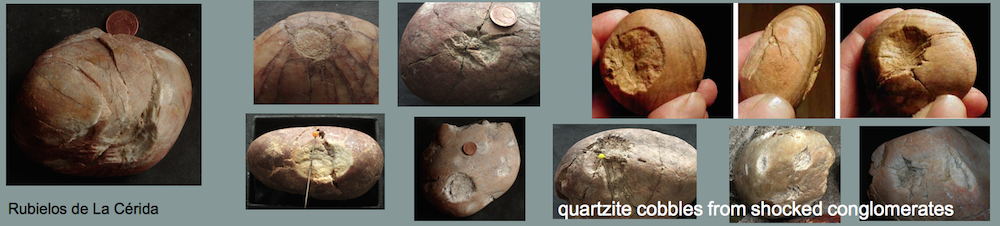
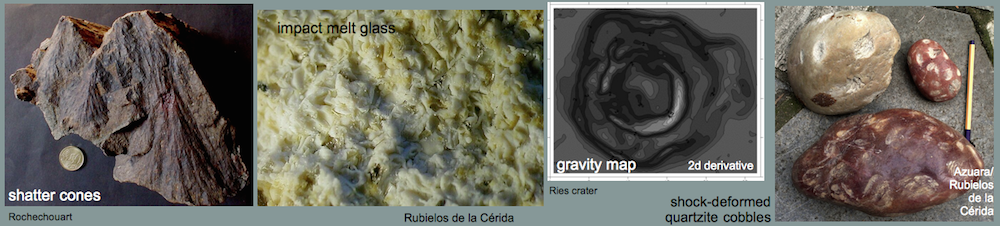
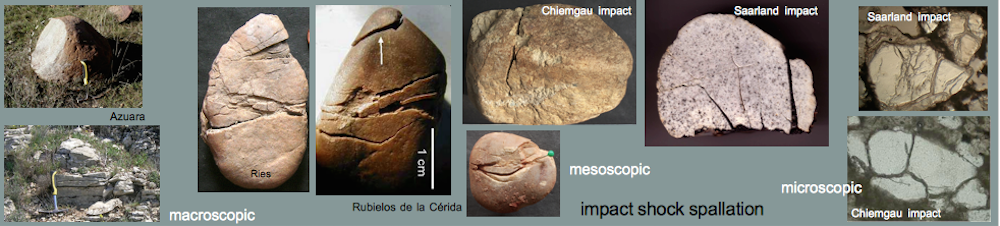
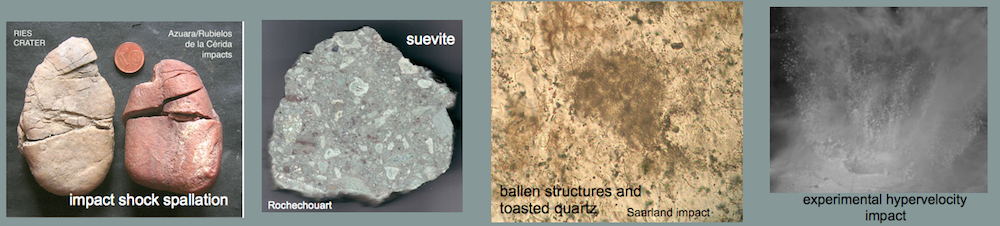
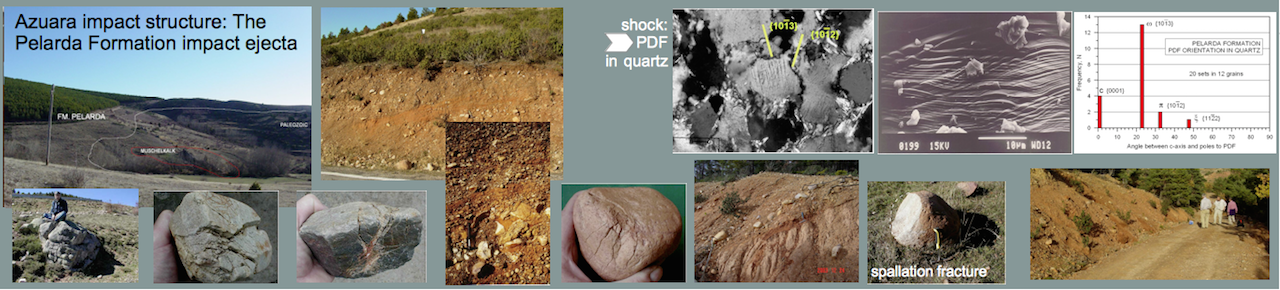
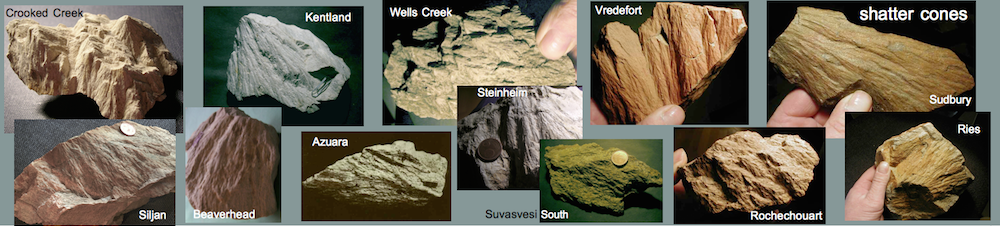
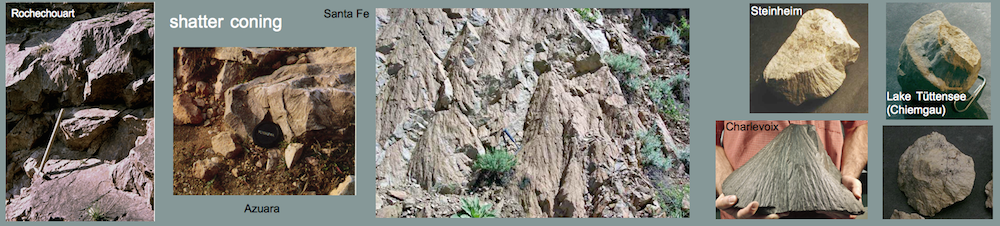
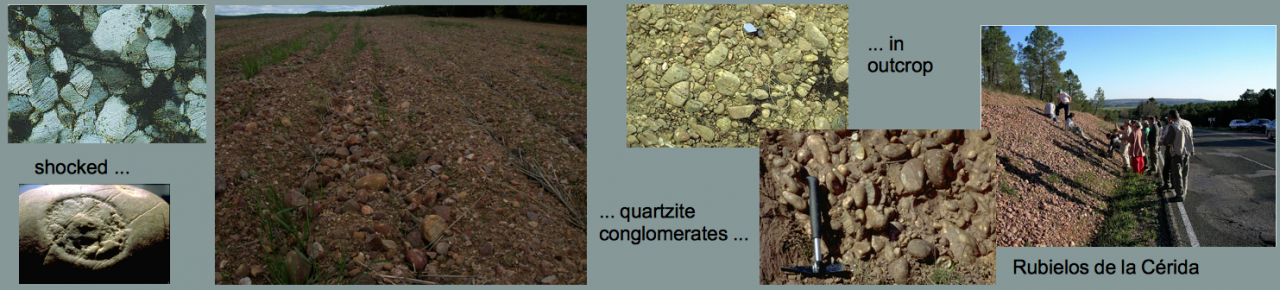
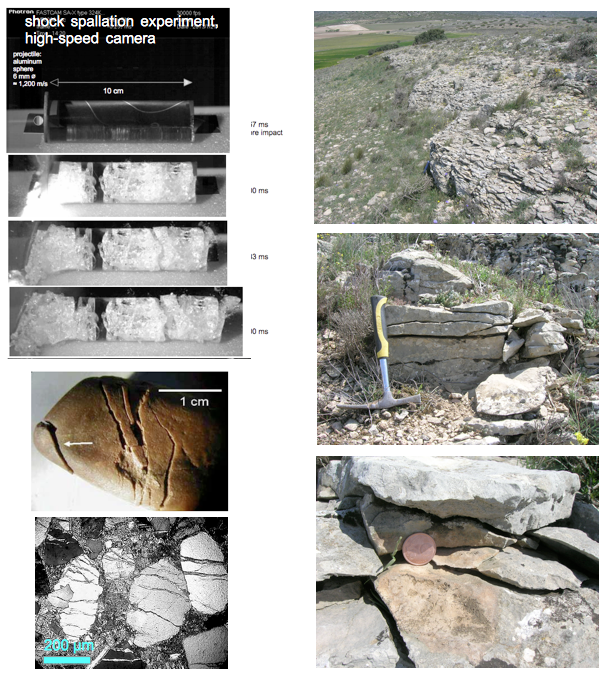
Left, from the top down: Shock spallation experiment producing typical open tensile fractures. – Spallation fractures in shocked quartzite cobble, Azuara/Rubielos de la Cérida impact event (Spain). Microscopic shock spallation in sandstone quartz grains, Rubielos de la Cérida impact basin. – To the right: Local megascopic impact spallation in well-bedded Jurassic limestones; Azuara (Spain) impact structure northern rim region south of Fuendetodos. Link to a full article on impact spallation.
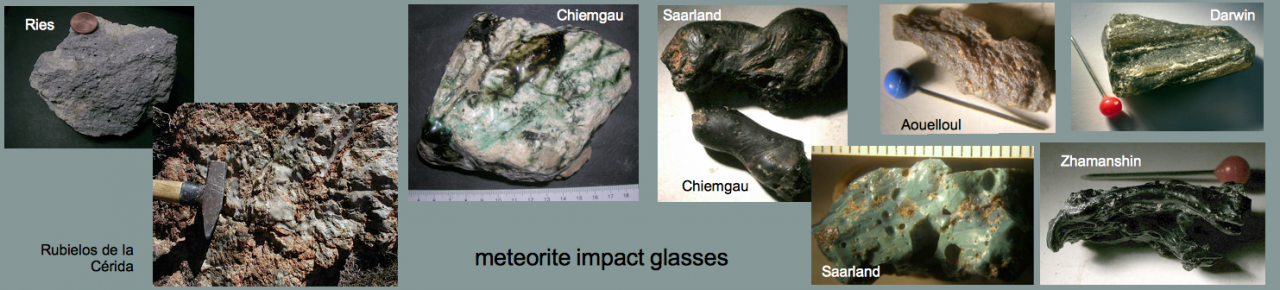
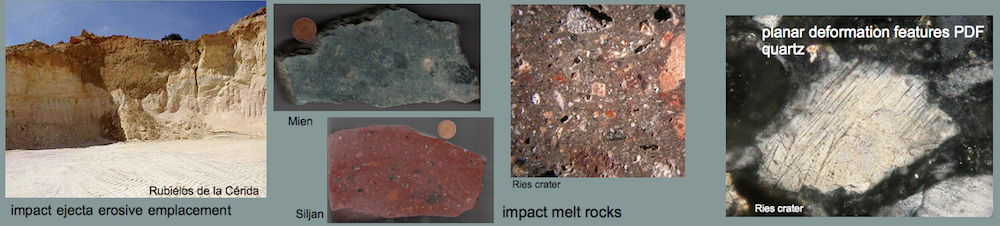
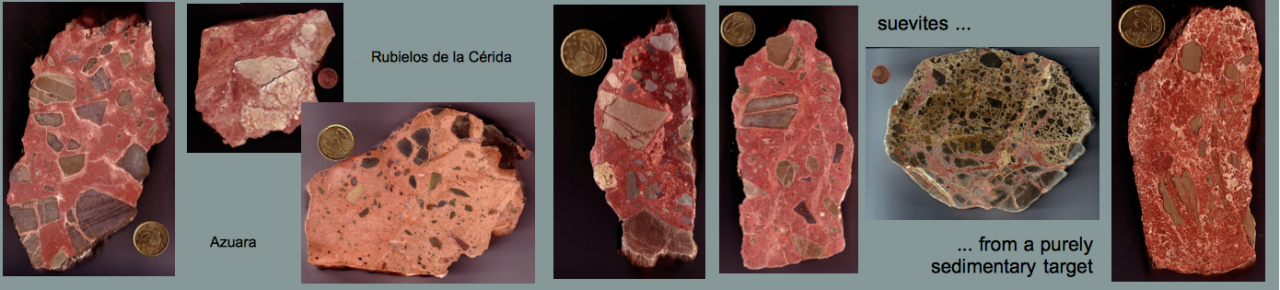
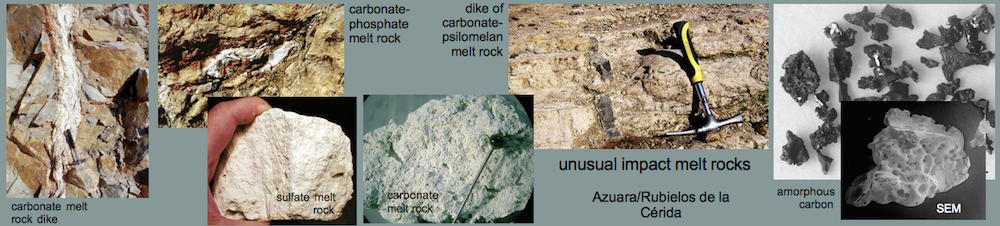
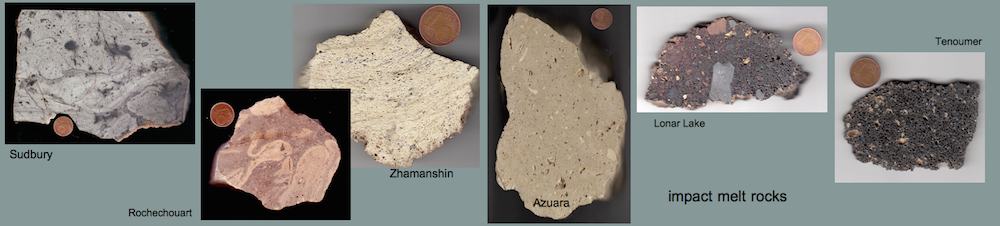
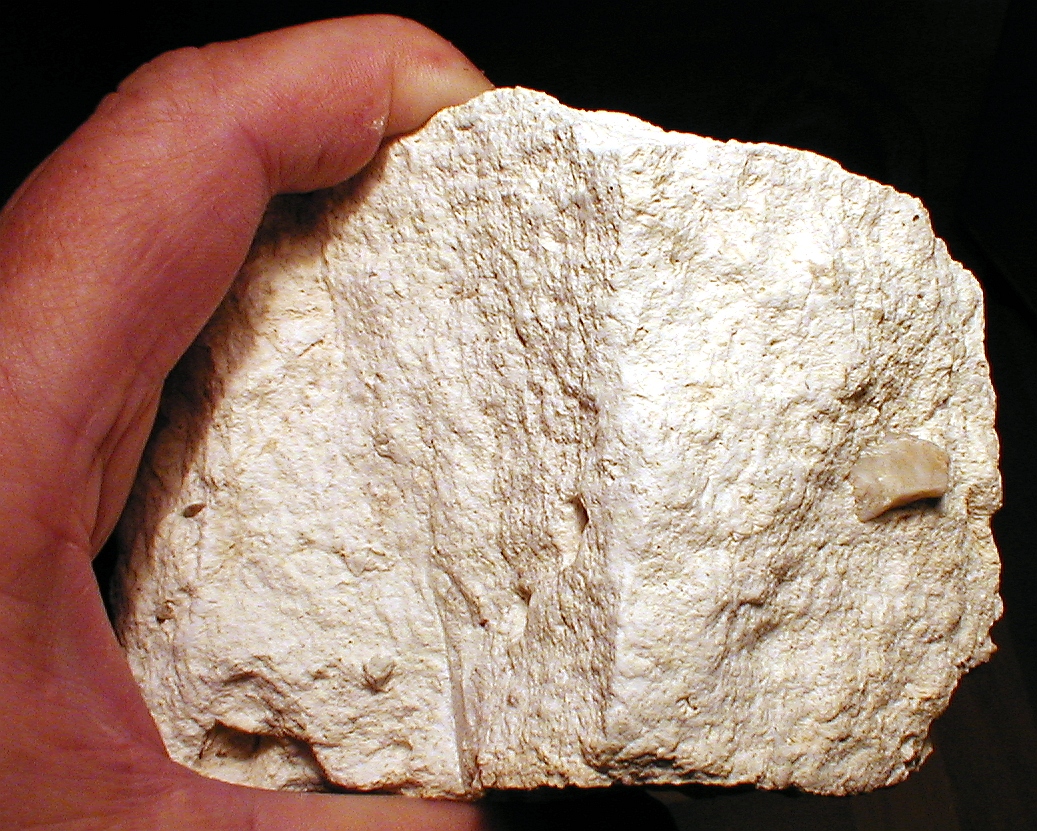
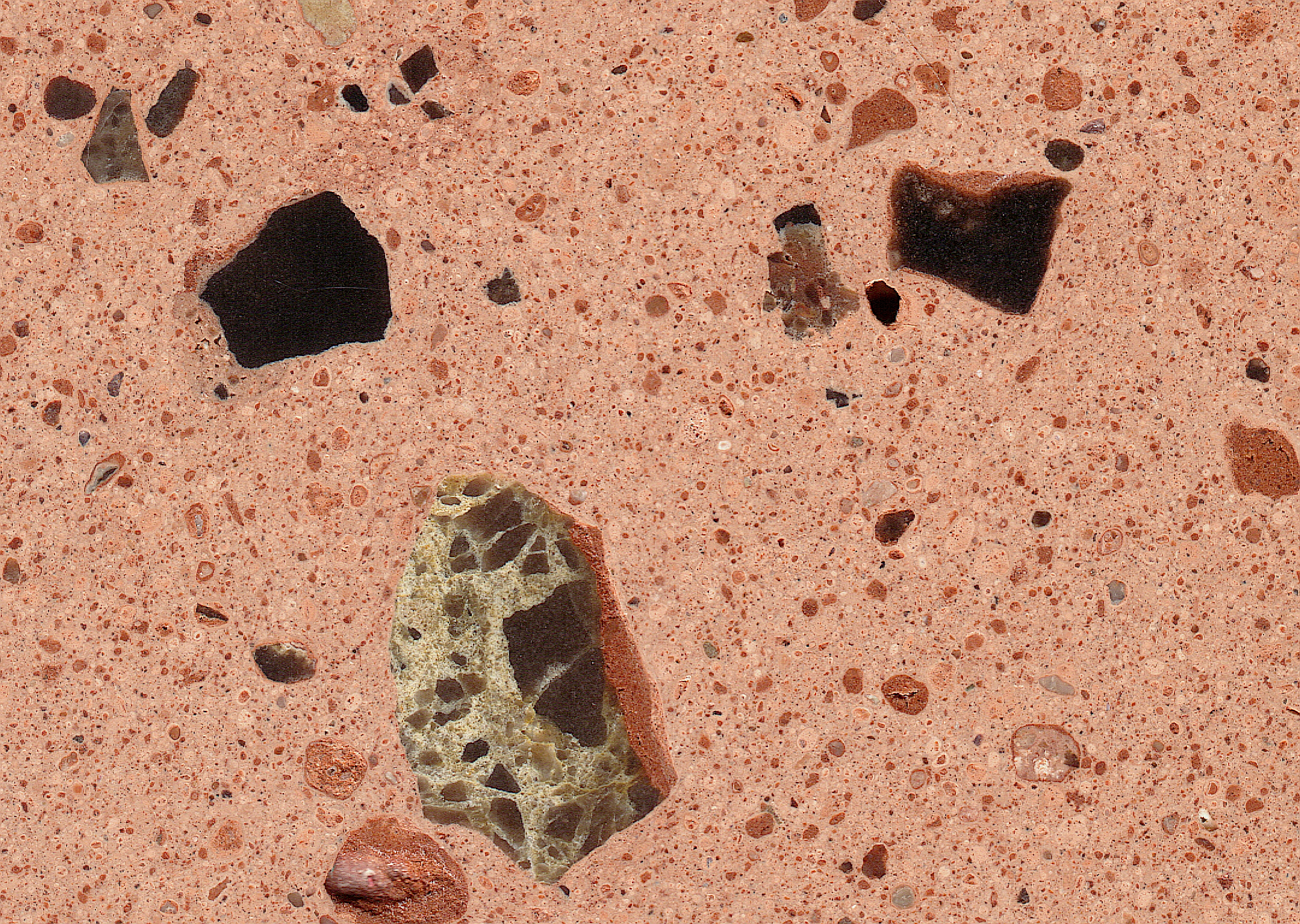
Impact sulfate melt rock from the Rubielos de la Cérida impact basin (Azuara impact event, Spain) – a rare meteorite impact signature
Strongly shocked quartzite clasts in the low-density, highly porous CaSO4 matrix.
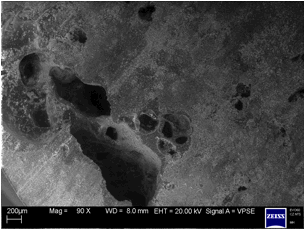
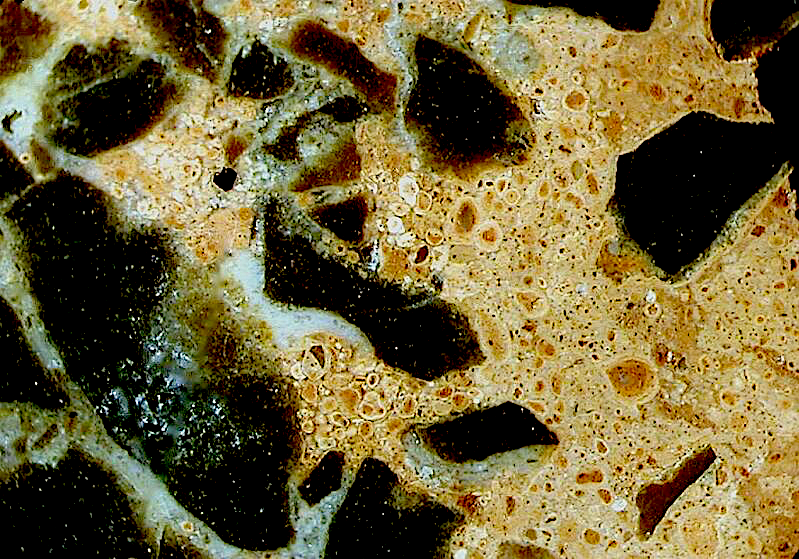
Clast of sulfate melt rock in the Barrachina megabreccia -The sulfate melt rock under the SEM. Note the vesicular texture. – More about Azuara and Rubielos de la Cérida impact melt rocks (carbonate melt, carbonate-phosphate melt, silicate melt, carbonate-psilomelan melt).
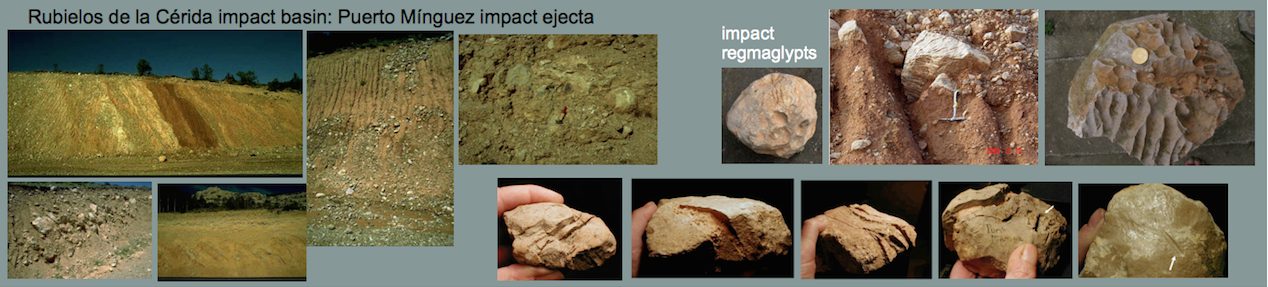
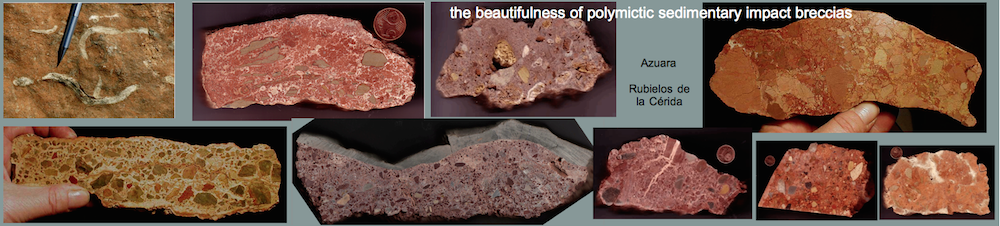
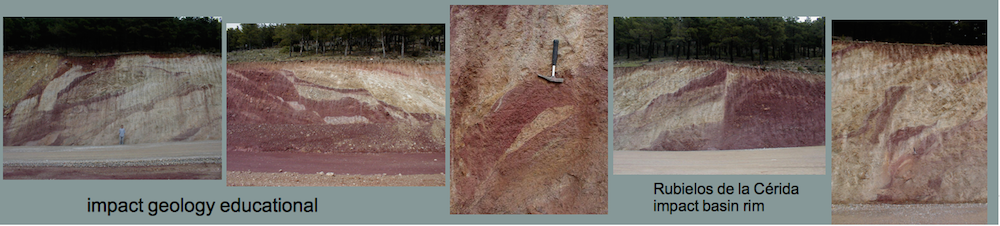
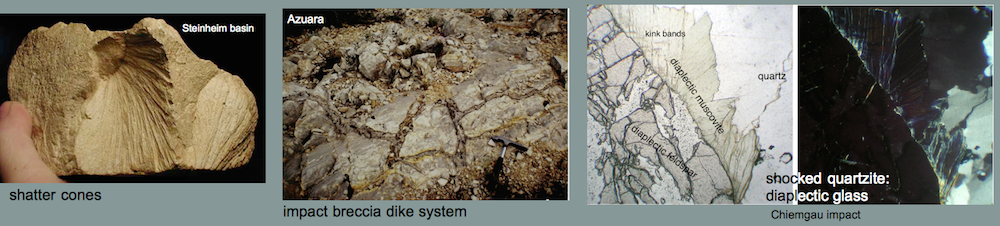
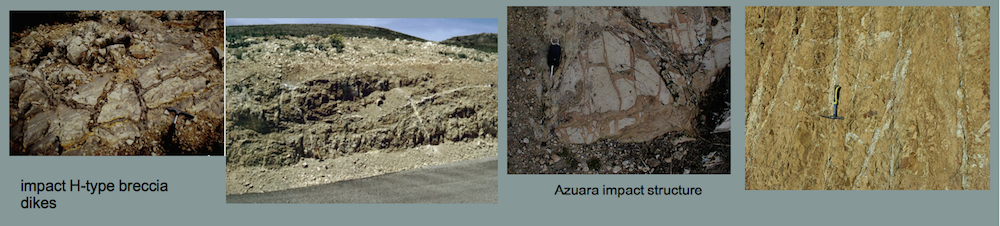
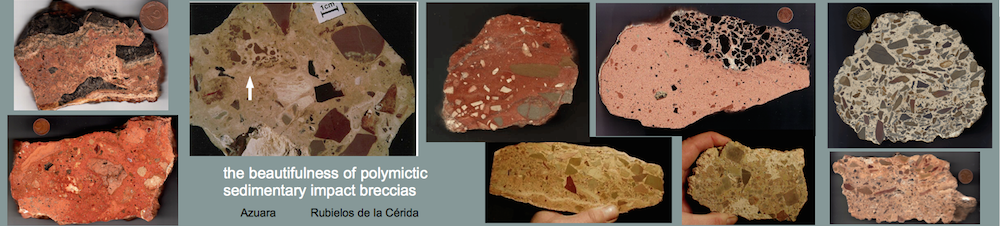
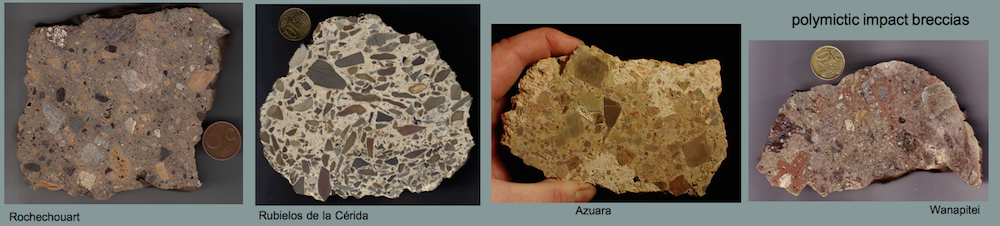
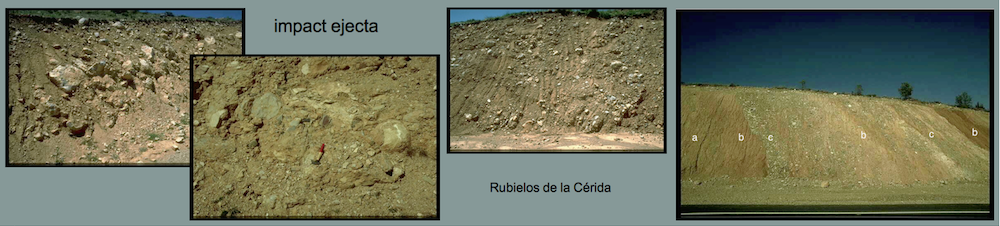
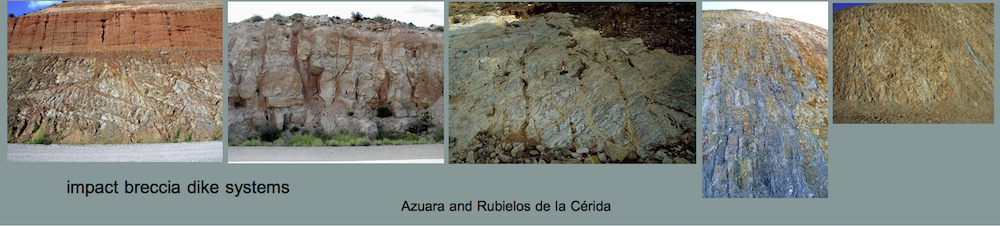
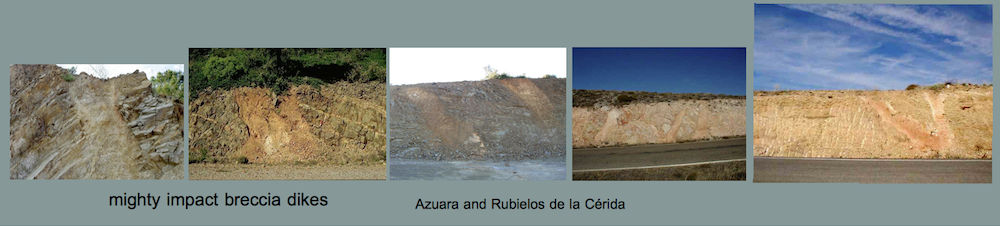
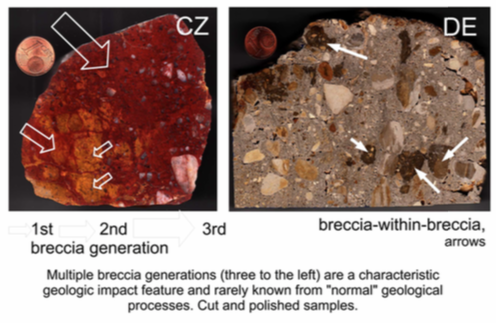
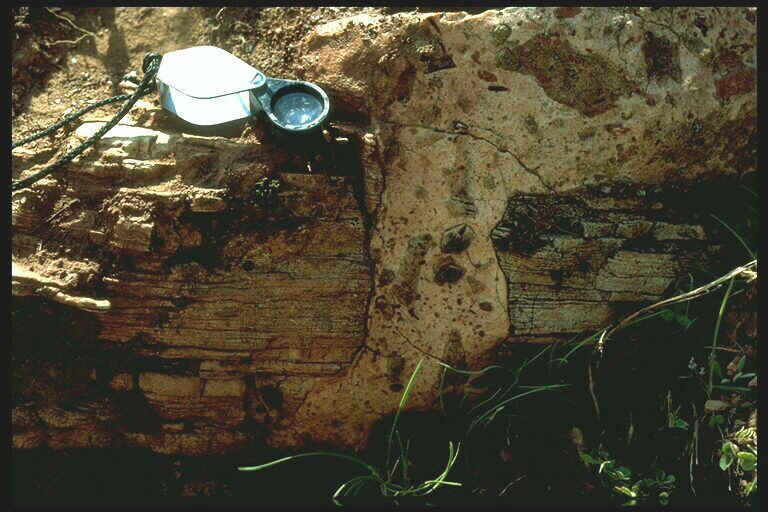
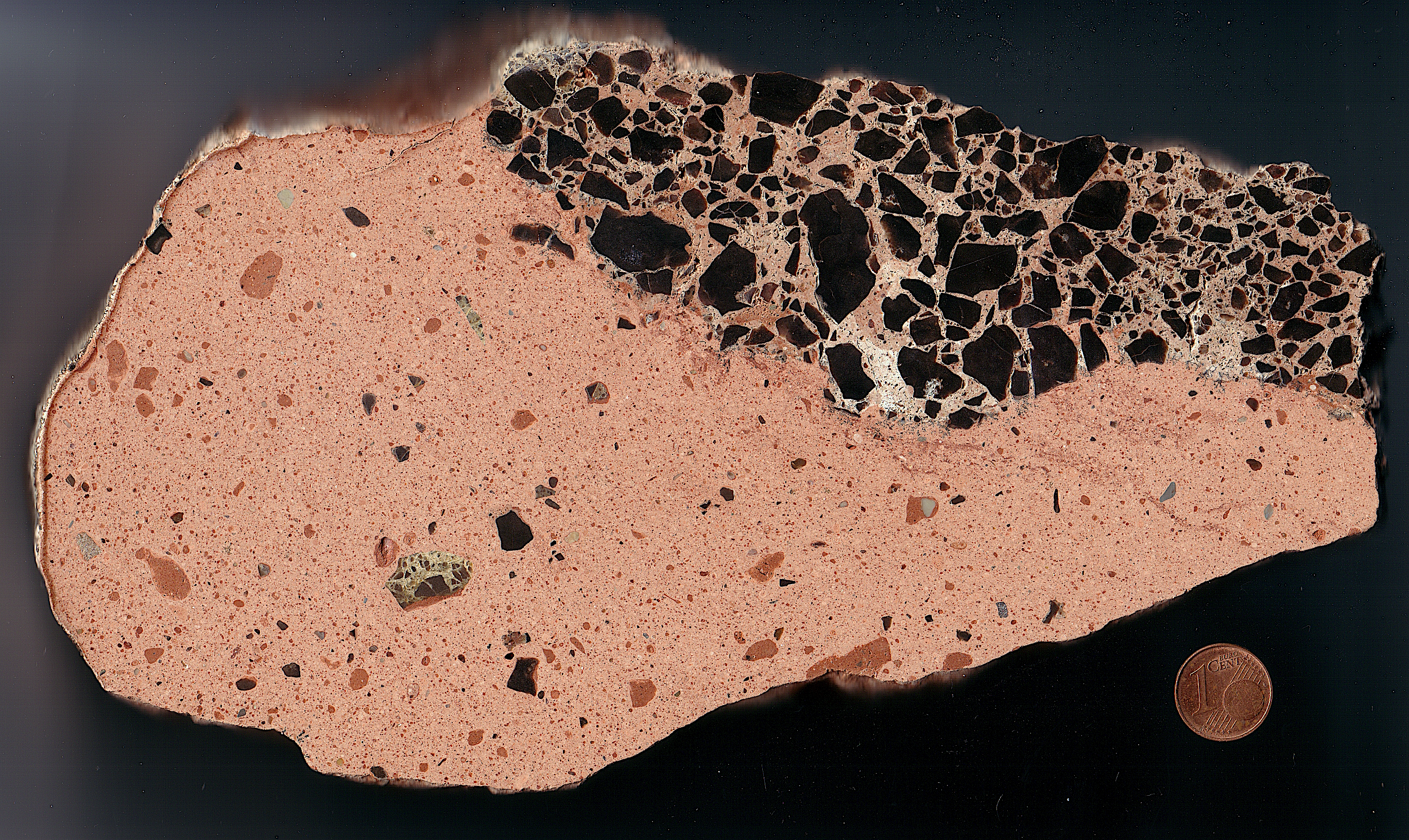
Polymictic impact breccia dike sharply cutting through well-bedded Muschelkalk limestone. – Rubielos de la Cérida impact basin (Spain) near Olalla.
Very nice example of the many breccia dikes in the Spanish Azuara impact structure and the Rubielos de la Cérida impact basin (crater chain). – More about impressive breccia dikes (dike breccias) in the Rubielos de la Cérida basin and the Azuara structure.
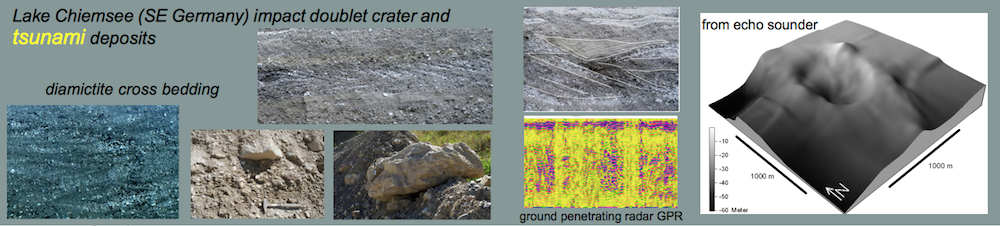
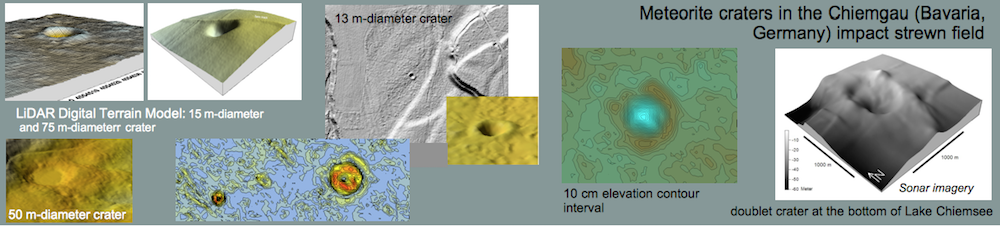
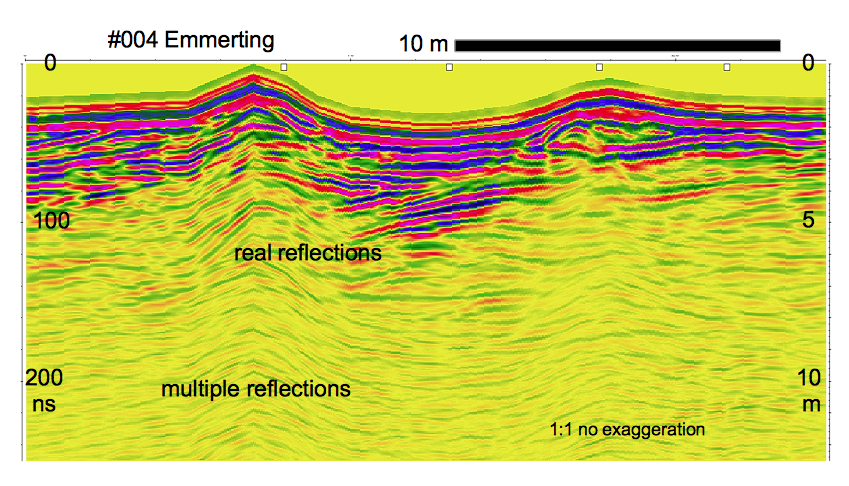
Diametral radargram across one of the most spectacular craters in the Chiemgau meteorite impact strewn field. Loamy-gravelly target material. Impact melt rocks, strong shock metamorphism. Strong reflectivities down to several meters depth are explained by extreme high-temperature sintering of the underground material. Note the complex excavation with the ring wall wandering outwards (as indicated with “real reflections”). 25 MHz center frequency with modulated 200 MHz.
More about GPR measurements over young meteorite craters: Click HERE
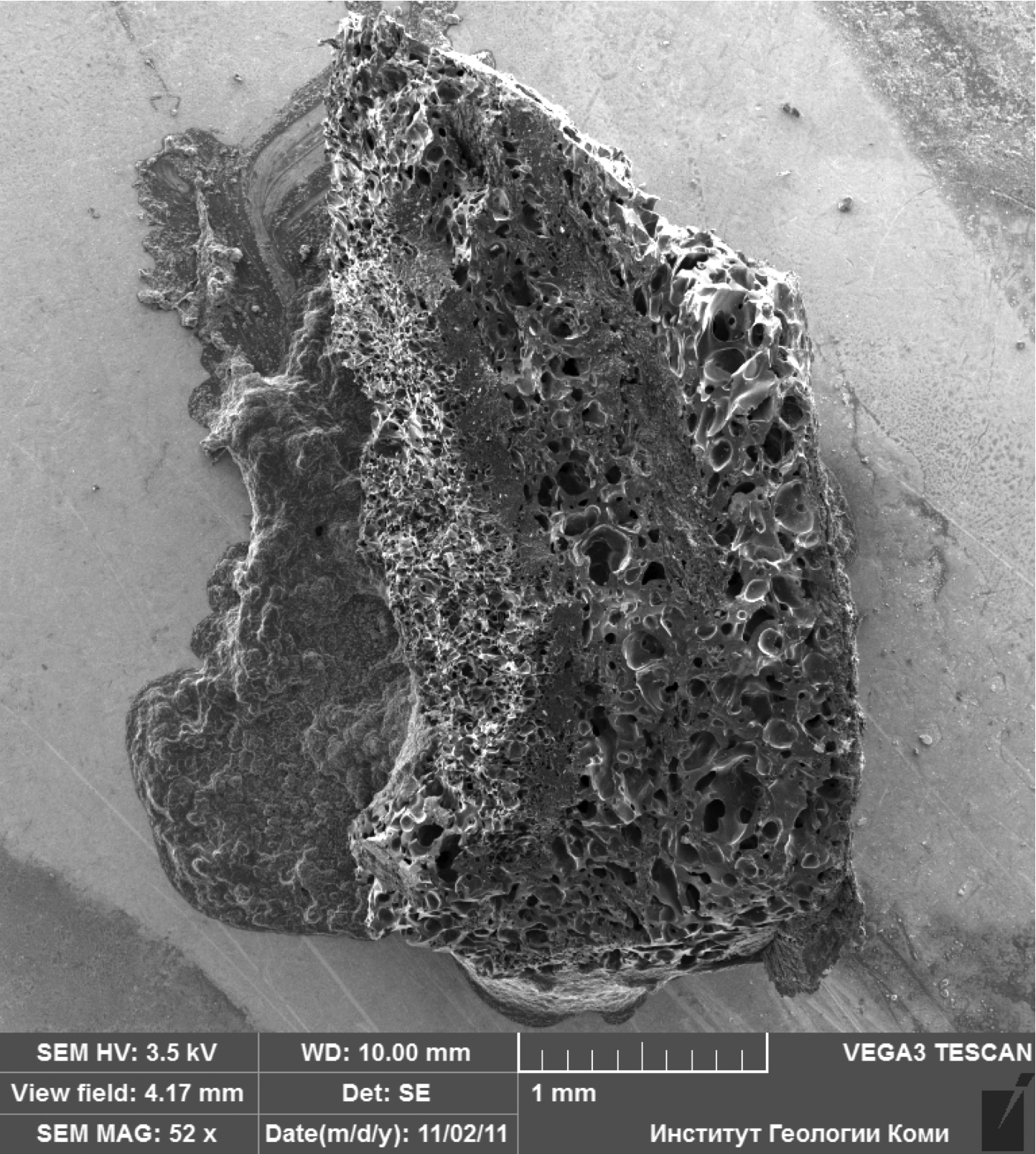
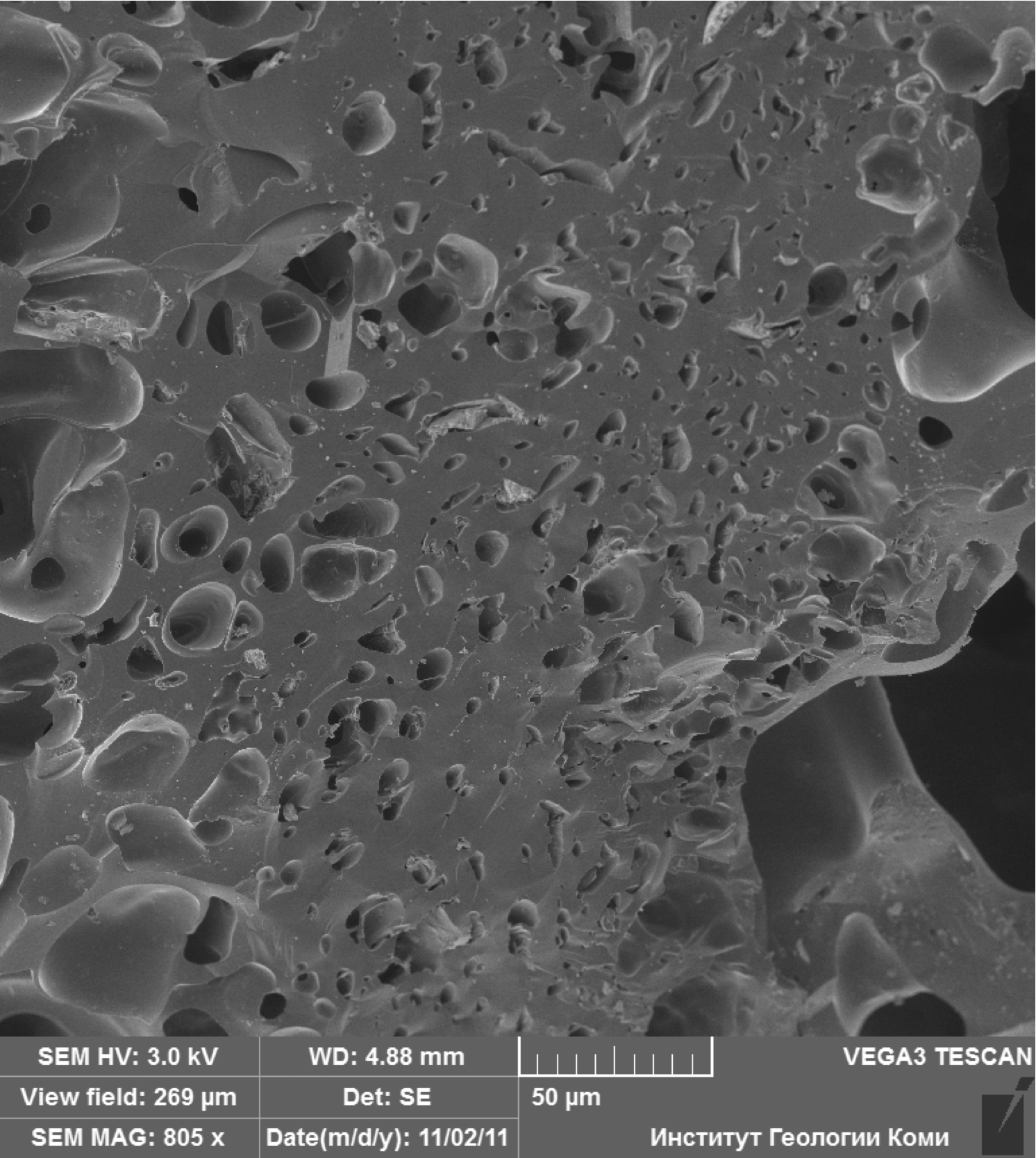
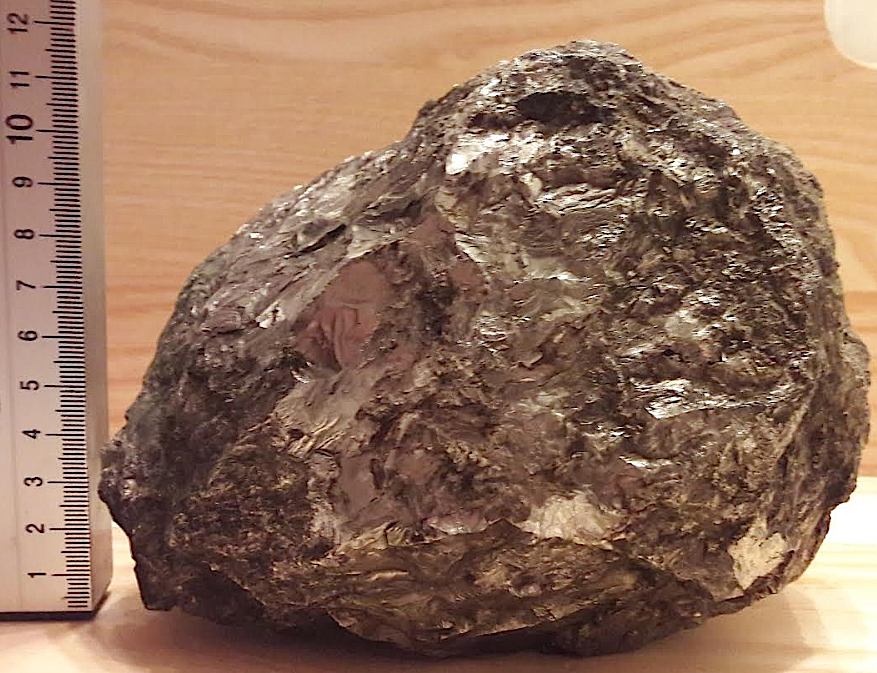
Chiemite – carbon impact rock (impactite) – the Chiemgau impact event as namesake
REM image. – Formation in spontaneous shock carbonization of the vegetation in the impact area. Investigations at the Diamond Laboratory, Geological Institute, Russian Academy of Science Syktyvkar, with optical and atomic force microscopy (AFM), X-ray fluorescence spectroscopy (RFA), scanning electron (SEM) and transmission electron (TEM) microscopy, high-resolution Raman spectroscopy, X-ray diffraction (XRD) and differential thermal analysis (DTA) as well as δ13C and 14C radiocarbon isotope data analysis.
Approx. 95% carbon; detection of diamond and carbyne; formation conditions for the latter 2500 – 4000°C and some GPa pressure.
Very “smart” people are still of the opinion that it is coke. Take a look at that too: file: EGU 2019 chiemite poster.pdf – Wikipedia
SEM detail view of the chiemite.
An extensive article on the chiemite has recently been published in print:


 Ground Penetrating Radar (GPR) – meteorite crater Chiemgau impact